Published January 07, 2026
a poetic expression: Creative Writing at NYU
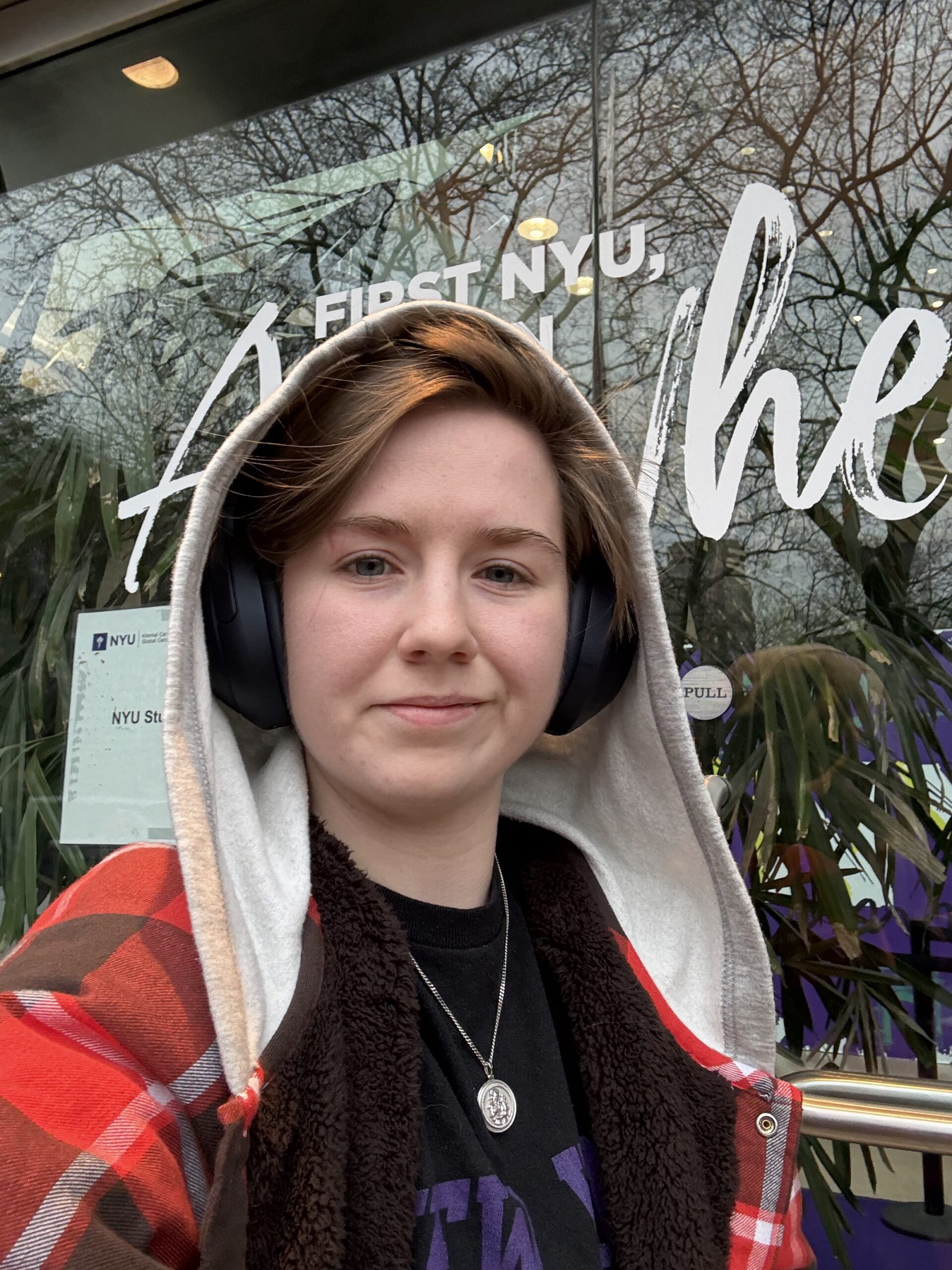
Personhood is an act of expression. It’s seen through different modes of speech: woven lines of dialogue, porcelain pieces of prose and poetry, and paintings of words and characters in both personal and fictional life. To embrace personhood, one can always turn to the arts. Look no further than the Creative Writing Program at NYU. NYU Creative Writing allows for students to navigate their aspirations through the lens of prose and poetry or nonfiction and fiction.
As a student who always had a wayward wish of writing, the NYU Creative Writing Program has allowed me to sculpt my own sense of voice.
Personified: The Program
At NYU, creative writing is only available as a minor for undergraduate students.
At the College of Arts and Science (CAS), students can pursue the English major and then add on the creative writing track. The creative writing track for the English major will have you take classes that focus on learning how to read critically as a writer in addition to creative writing classes. Dramatic Literature , also at CAS, is another related major, but is more focused on the study of drama and theatrical productions. You could also major in Dramatic Writing at the Tisch School of the Arts, and choose from three mediums: playwriting, screenplay, or episodic.
With creative writing as a minor, you can combine it with whatever major you want. I am actually a Classical Civilization and History double major! Writing is a personal passion of mine, and I weave a lot of my classics background into any writing that I do.
When it comes to the NYU Creative Writing Program, it’s all based on the workshop, sitting down with other students in a seminar-like conversation. Workshop is about crashing currents of critiques and waves of words. The workshop style ensures that everyone will come to class prepared—either you are presenting or you are ready to give feedback. It’s all about growth and picking up styles that you wish to dabble in.
At the end of the semester you take what you’ve submitted to the workshop and show how you’ve revised and crafted a final portfolio. If you’re passionate about breathing life into your own works, I recommend the NYU Creative Program for the sake of peer review and support.
The Sequence (of Similes)
The NYU Creative Writing minor is a sequence. The first step in your journey of pens and letters begins with one of two possibilities!
The first is a course you can take during the academic year—Introduction to Prose and Poetry. This is a four-credit course where you will be dabbling in both poetry and prose writing. In my course, you were required to do one piece of poetry and one piece of prose and had the option to do your third piece in either genre.
The second way you can get started is in a summer intensive course called “Writers in. . .” This summer intensive takes place in Paris, Florence, and New York City over the summer. You get to choose your focus on one of three options: poetry, fiction, and nonfiction.
After you take either Introduction to Prose and Poetry or the Summer Seminar, you have access to the next steps in the sequence: intermediate, advanced, and intensive writing classes. In an intermediate class, you will choose to focus on one of three forms: poetry, fiction, and creative nonfiction. You are welcome to try all three forms if you wish, but each offers their own separate class. For example, I took Intermediate Poetry, and I knew a few people that also took Intermediate Fiction.
Intensive courses are application based. As soon as you take Introduction to Prose and Poetry or the Summer Seminar, you can apply to the intensive seminar for that semester. Each of the three different forms has their own intensive seminar class with only twelve students in it. To get in, you will be required to submit pieces of work. You can consider this the final part of the creative writing course sequence.
The Music of Thought (a Metaphor of Personhood)


During my time at NYU, I have taken three creative writing courses. I am preparing to take my fourth to complete my minor.
My first year during the fall semester, I took the Introduction to Prose and Poetry class. Introduction to Prose and Poetry started at 8 a.m. It required me twice a week to be up by 7:00 a.m. to give myself time to grab food and rush over to the Silver Center where the course was held.
I went in dreading having to write a poetry piece, as I had always been a fiction writer. As a dyslexic student, I found the avenue of poetry to be difficult. When it came time to write a poem, I wrote my first one: a long winded rant about why I despise poetry. I loved writing it. I dabbled in something I struggled with and fell in love. When I chose to do my third piece in the class, I created another poem titled “Phoebus.”
Quickly I found that poetry became my chosen style. It allowed me to express my thoughts, and I felt unrestricted. Poetry allowed me to transform the swirling images in my head into something. Instead of going with Intermediate Fiction as I originally planned, I took Intermediate Poetry. This class was all centered around American poetry and breaking the boundaries of restrictions. I found some of my favorite poets and developed a love for reading poetry. This cemented poetry as a means to find my voice.
Now I am taking Advanced Poetry my senior fall. Before, I gave myself a break from the courses. I wanted the ability to still sit with this program. To feel like I had finished it. I am still figuring out exactly what words to use, but I finally feel like my voice has been found. I can blend my interests in history and classics and horror into a warped piece that means something to me.
Recently I applied to the Intensive Seminar for Poetry. If I don’t get in, I plan on retaking Advanced Poetry. (You can take courses multiple times with new professors for credit.) This allows you to get different perspectives. Each workshop is different—even if you have the same professor, the people in the workshop are not the same.
If you are a writer who is interested in NYU, the Creative Writing Program is the perfect place to find your voice.


Related

A Tale of Three Cities: NYU’s Summer Creative Writing Programs
Aspiring writers can spend a summer honing their craft with NYU’s three immersive creative writing programs in Paris, Florence, and New York City.

A Creative Writing Minor Complements Any Major
Across majors and around the world, NYU students find the value in a Creative Writing minor.
A Guide to Writing Majors at NYU
At NYU, English and creative writing aren’t the only options for aspiring writers!