Published October 07, 2025
Live Sustainably in NYU Residence Halls

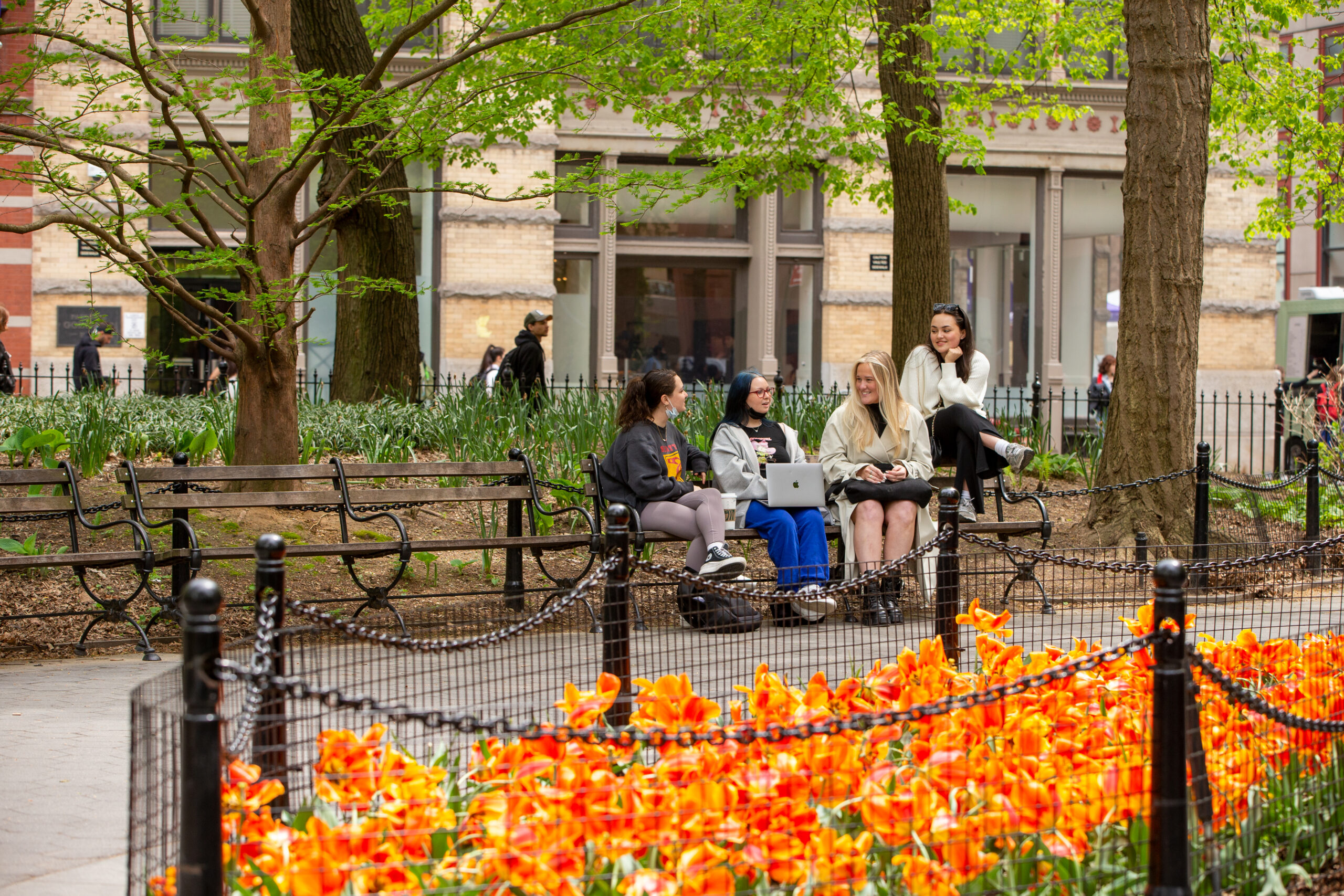
With a pledge to be carbon neutral by 2040, sustainability appears in every aspect of life at NYU. In fact, the University boasts 3.2 million square feet of LEED-certified buildings, over 600 courses on sustainability topics, and hundreds of sustainability events each year. Within the residence halls, sustainability is also a growing focus. Students live in green buildings and are empowered to make eco-friendly choices. Together, these efforts are helping NYU reduce waste and emissions while making our campus and city a better place to live.
Green Building Design
NYU student housing has made great strides in sustainability over the years, most recently with the 2024 retrofit of the historic Rubin Hall. Today, the building still features an iconic 1920s facade, but its energy-efficient design is state of the art. The new insulation as well as heating and cooling systems provide consistent, comfortable temperatures for students while eliminating reliance on fossil fuels. To further save energy, occupancy sensors limit heating and cooling of empty rooms. Triple pane windows also increase thermal retention and shield students from outside noise. Since the renovation, the residence hall is pursuing Passive House certification and may become the world’s largest Passive House retrofit.
“Our students and faculty are leaders in their research and teaching about sustainability, and they deserve nothing less in our facilities,” says Chief Sustainability Officer Cecil Scheib, who leads the Office of Sustainability at NYU.
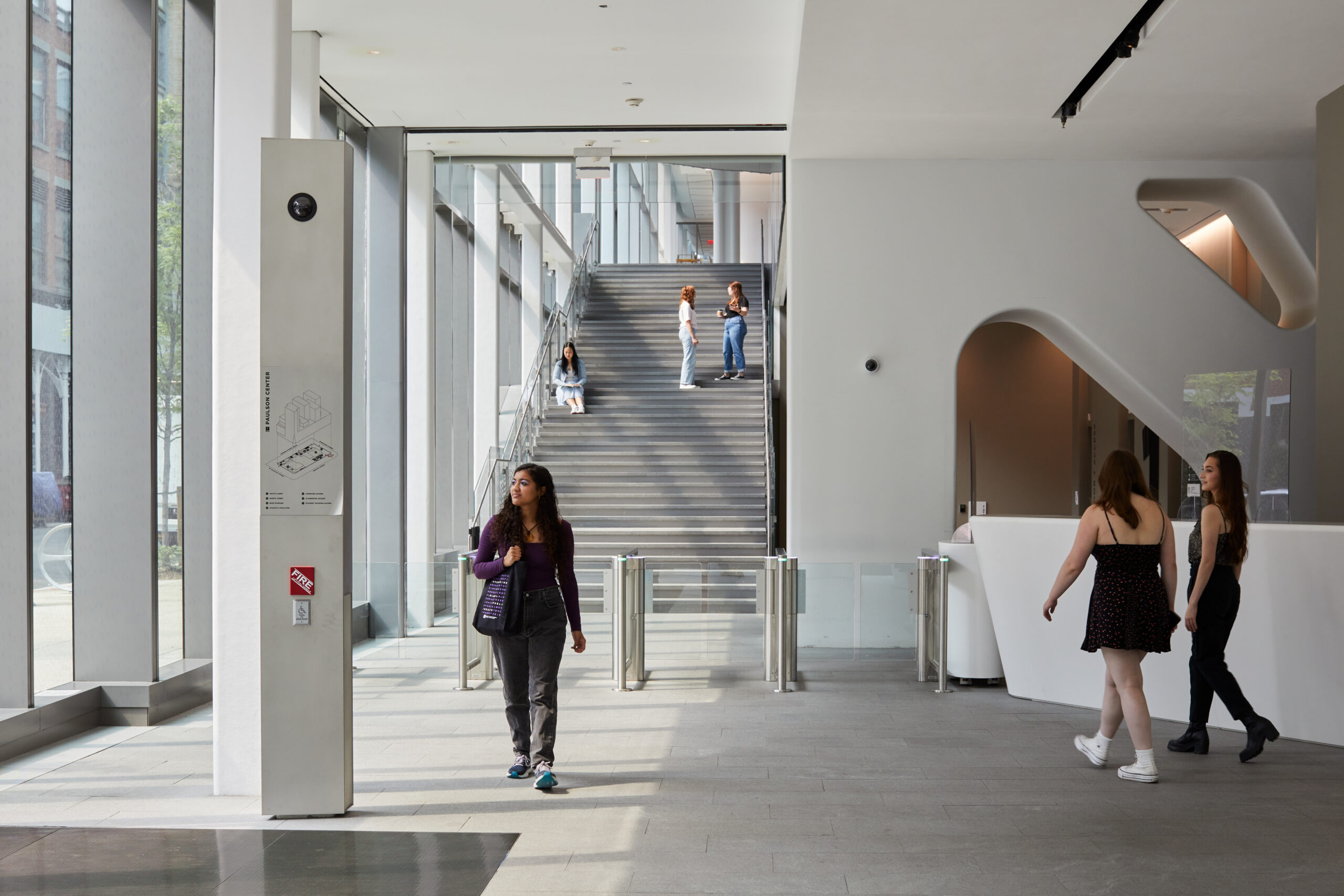
Minimizing environmental impact is likewise a priority for new builds. For example, the John A. Paulson Center—home to classrooms, athletic facilities, student residential towers, dining locations, and more—opened in 2023 as a shining example of sustainable construction. Its LEED Gold-certified design reduces lighting and air conditioning needs, improves indoor air quality, and exceeds energy conservation code requirements by more than 20 percent. Outside, the extensive green roof limits stormwater runoff, decreases the urban heat island effect, offers outdoor communal spaces, and promotes biodiversity.
A Shared Passion for the Environment
At NYU, the focus on sustainable living isn’t only coming from university leaders. It’s also a big priority for many students. “It’s vital to our mental health, livelihood, and happiness to feel connected to the natural world and to protect the resources it provides,” says NYU Environmental Studies major Jack Sloan, whose recent research project explored the benefits of the bird-friendly glass used in NYU buildings such as Paulson. “As a society we need to not cause more damage to our natural systems than we can repair. For me, it feels like nothing could be more important.”
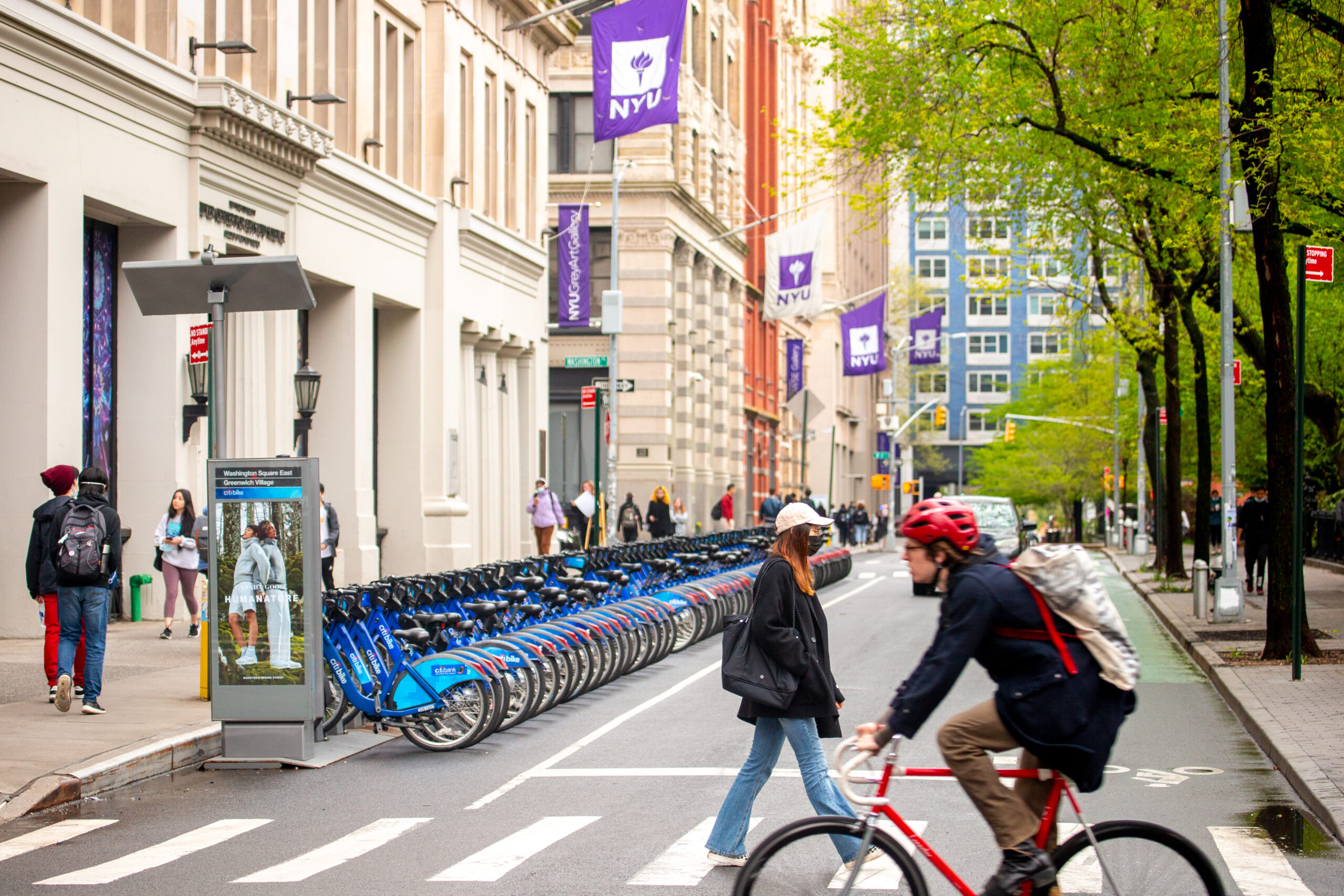
For some students, like Psychology major Bailey Hunt, sustainable living is part of what initially drew them to NYU. “New York City is such a sustainable city. By extension, NYU is a very sustainable school. Living in the city and being able to use public transportation, eat better, and walk places reduces your carbon footprint so much,” shares Bailey. She’s entering her second year as an RA for the Sustainable Living engagement community in Palladium Hall. There, Bailey lives alongside like-minded students and hosts events like documentary screenings, vegan restaurant meetups, garden tours, and gallery visits to see art made of recycled materials.
Sustainable Choices
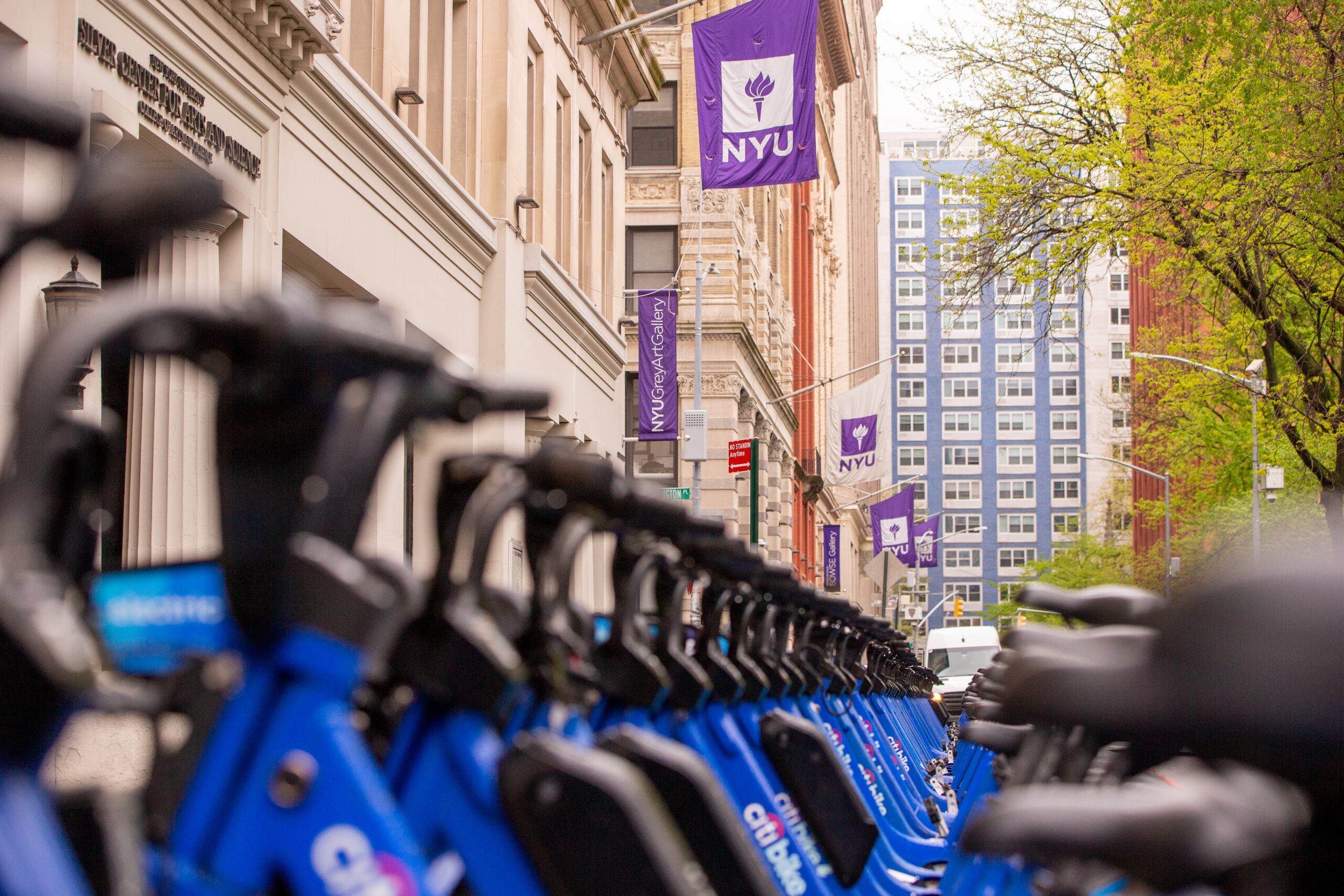
Of course, you don’t have to live in a themed community to live sustainably in NYU’s residence halls. Laundry facilities at all 23 halls default to cold wash cycles, saving energy and helping clothes last longer. Bike rentals and parking, public transportation, and the NYU shuttle are easy to access. Recycling is available across the residence halls (and the entire campus). In halls with dining locations, you’ll find abundant plant-based options and compostable to-go containers. Thanks to the student-run club Two Birds One Stone, leftover food from dining locations goes to nearby food pantries.
Additionally, clothing swaps are common in the residence halls. For example, students donate unwanted items at the end of each year through the Green Apple Move Out program. Other students can then claim those goods for free, including through the new NYU Swap Shop, leading to less overall waste.
“Sustainable living is important to help the environment, help others, and give back to the community,” says student Chloe Stone. She’s a Politics and Spanish and Linguistics double major and the NYU Inter-Residence Hall Council President. “NYU has so much power as a university. When we commit to sustainability, we can really impact change and impact our community.”
Related
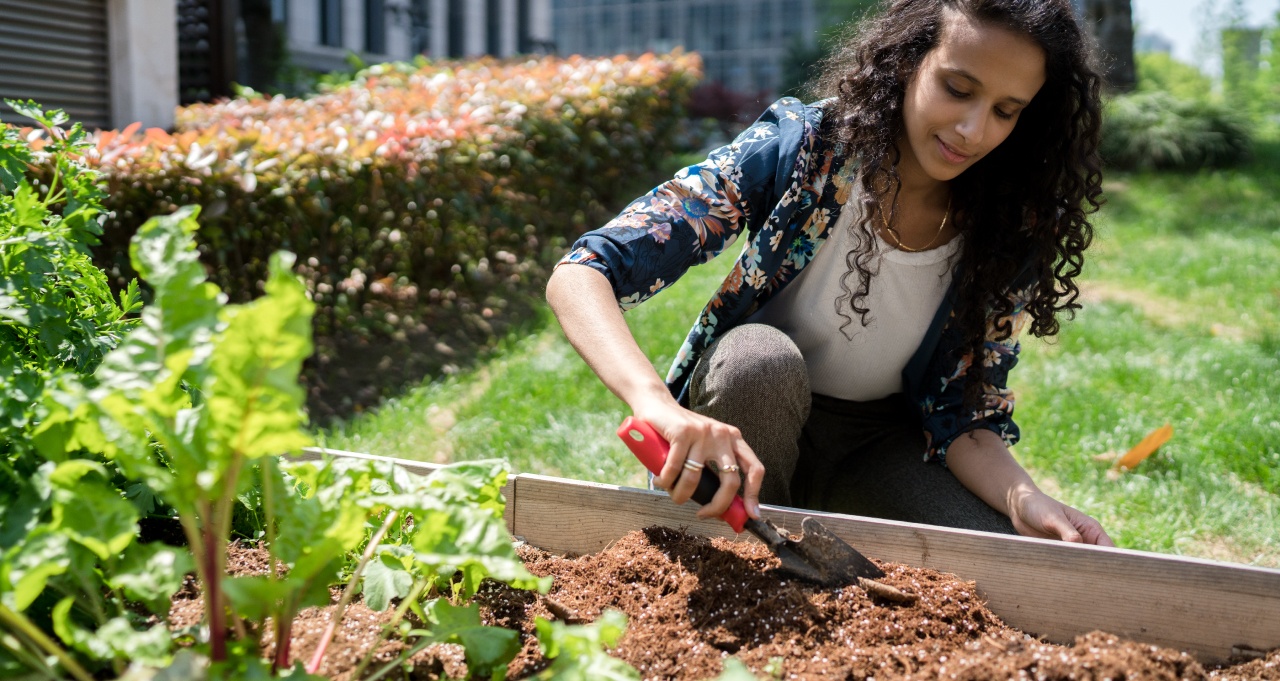
Sustainability on Campus: Your Green First Year
From courses to clubs and urban farms to festivals, you can get involved in sustainability at NYU from day one.

NYU’s Sustainability Internship Grant Launches Green Careers
NYU offers countless ways to explore sustainability-related fields, such as the Sustainability Internship Grant.
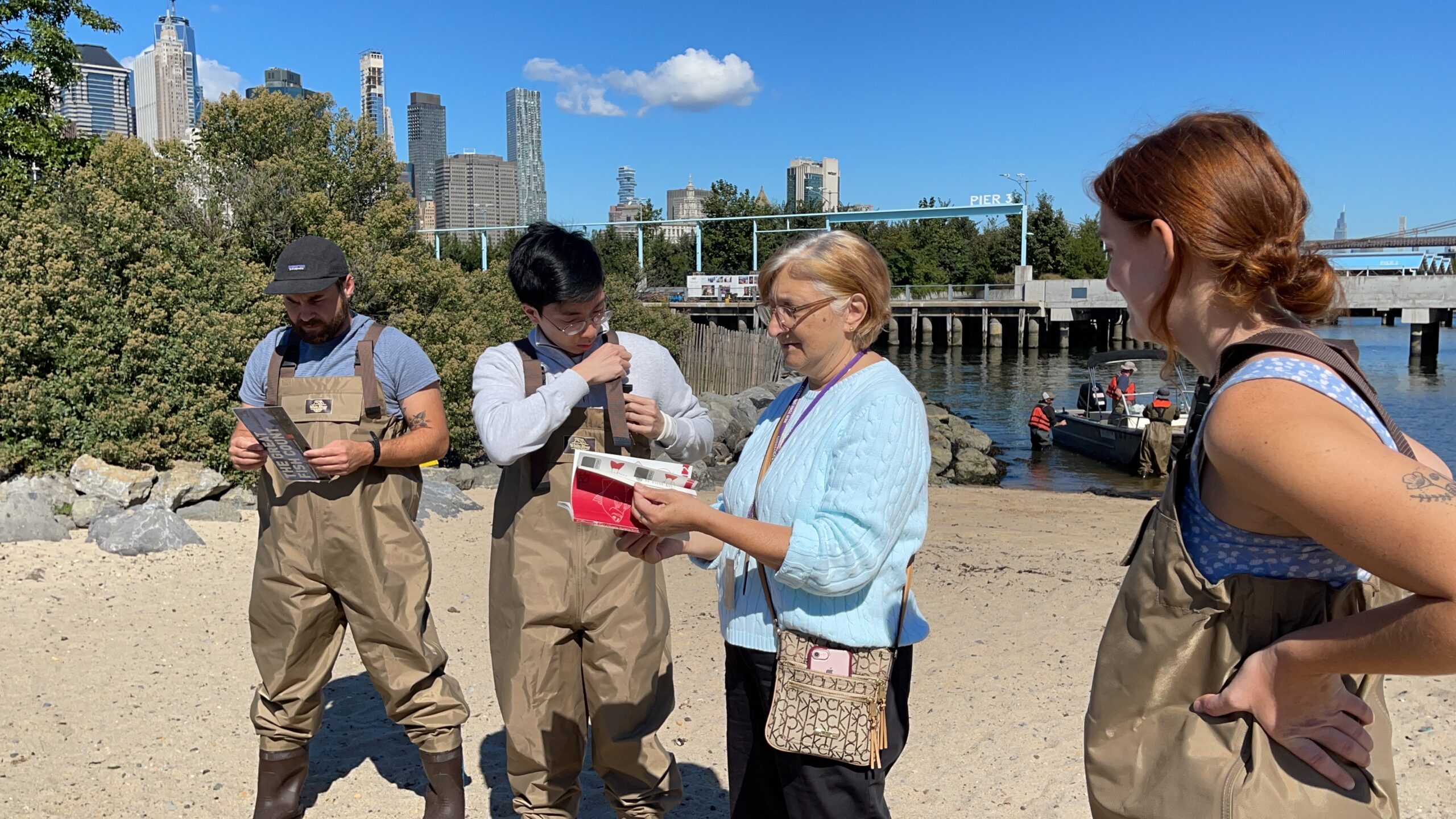
In This Sustainability Course, New York City Is Your Classroom
NYU offers experiential courses that get you out of the classroom and into New York City, exploring and engaging with the city as you learn.