
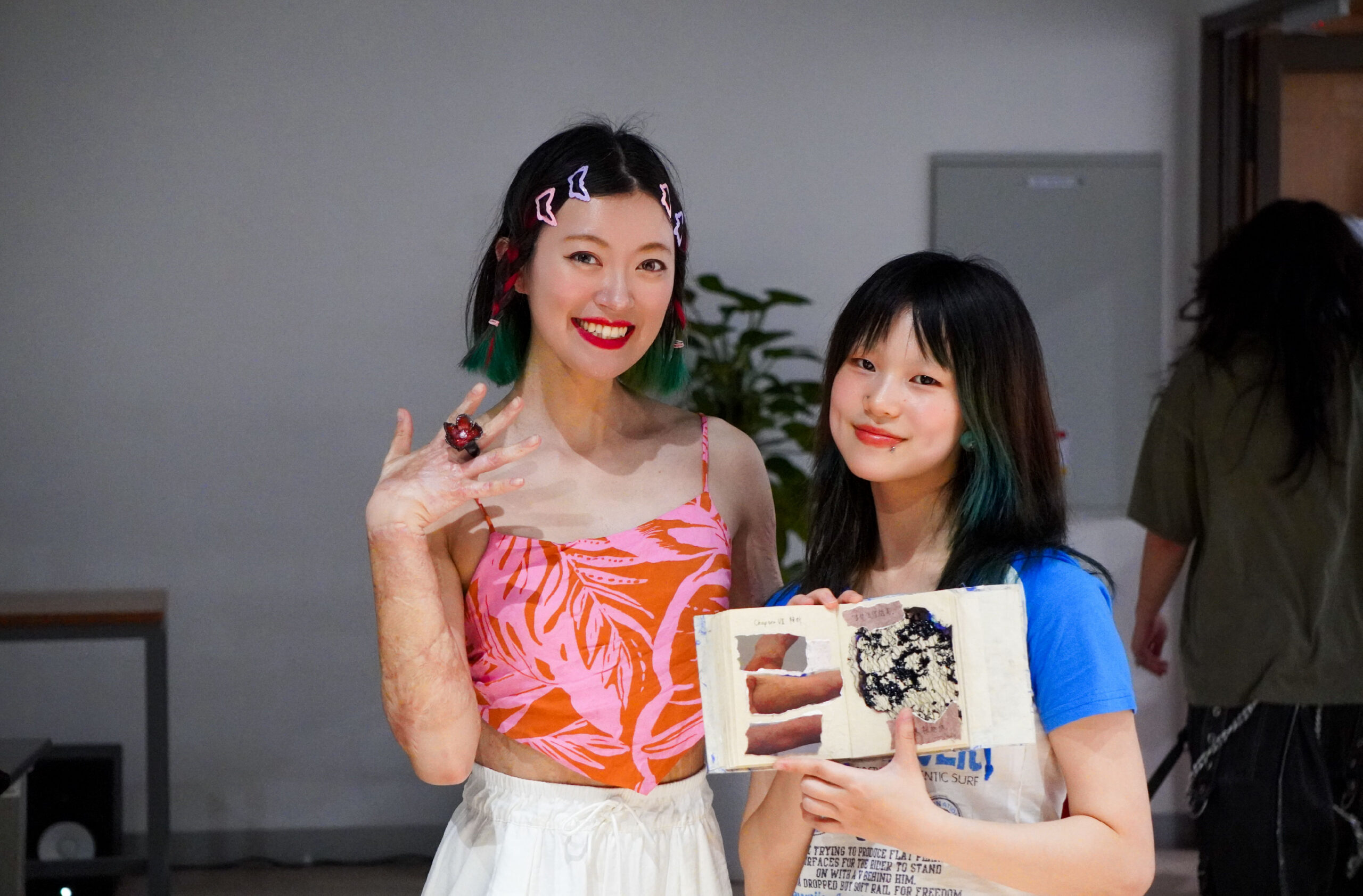
NYU Shanghai alum Sophia Wan Zhiyan didn’t always think of herself as an artist. But four years of Interactive Media Arts (IMA) classes at NYU Shanghai convinced her otherwise.
Following Her Passion to Create
In her first year at NYU Shanghai, Sophia enrolled in the introductory Communications Lab course, driven by a desire to express herself. “I realized how much room there was for creation,” she recalls. “It was exciting in a way that gave me a deep sense of fulfillment.”
In the course, she also found a place where she belonged. The Interactive Media Arts community, as she describes it, functions less like an enclosed group and more like an expanding network—“like ripples spreading outward.” In that environment, something subtle began to shift. At first, when professors introduced students as “IMA artists,” the descriptor felt distant, almost aspirational. But over time, it became an identity she could claim.
“I started to think—maybe I am an artist, too,” she says.
Merging Research and Art
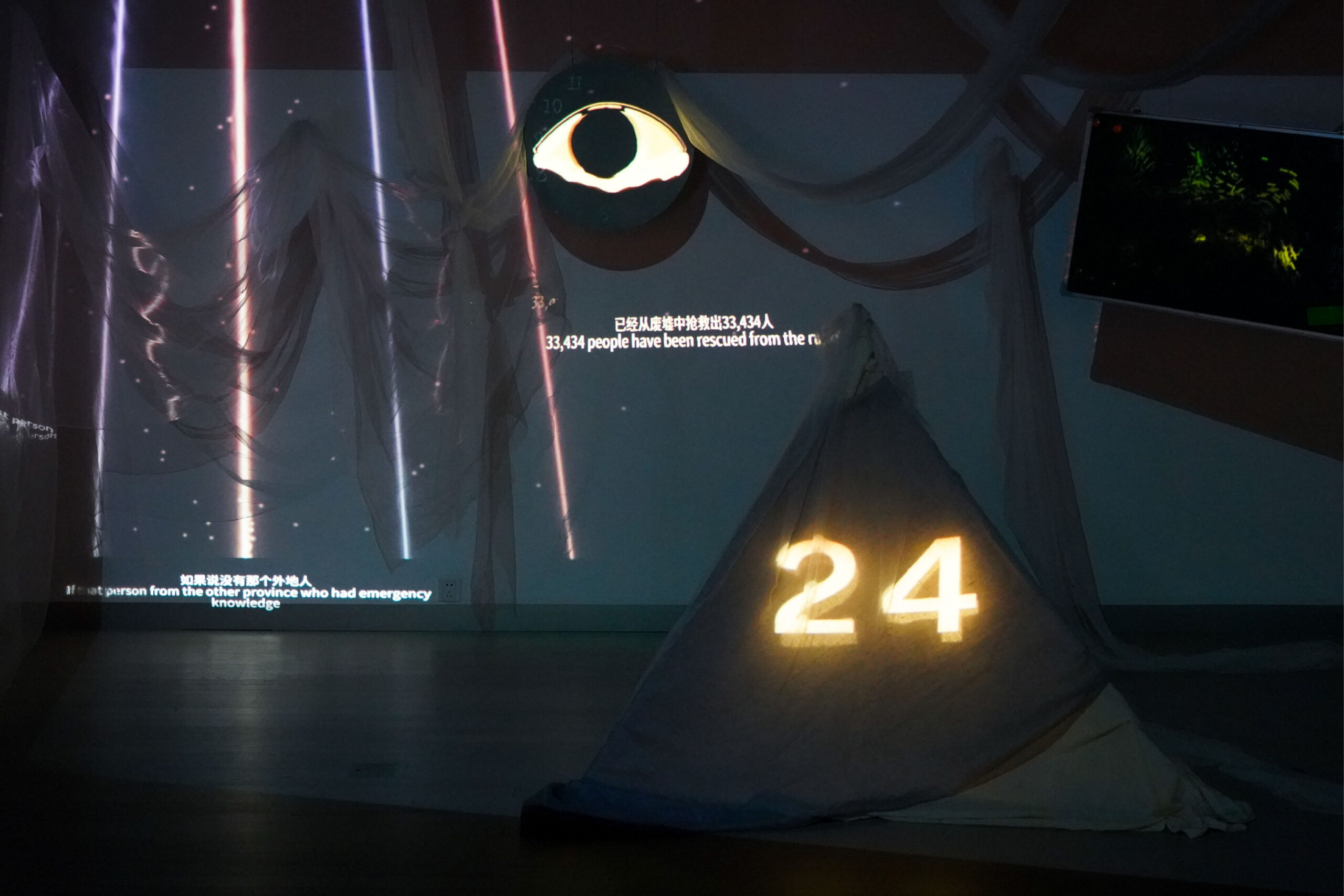
During her sophomore year, Sophia and her IMA classmate Shiyu (Maggie) Wang, also a 2026 graduate of NYU Shanghai, worked on a project funded by the Dean’s Undergraduate Research Fund. It centered on the 2008 earthquake in Sichuan, the province where Sophia grew up. While time had passed, the disaster remained vivid in the stories of her teachers and those around her: moments of loss, of survival, of lingering fear.
As she gathered accounts through interviews and archival research, Sophia found herself drawn less to the scale of the event than to the intimacy of individual memories. Each voice seemed to carry a weight that no overarching narrative could fully capture. She decided then to focus her work on the intersection of collective memory and personal experience.
Exploring the Arts Abroad
While studying away at NYU Florence, Sophia began to think more critically about what it meant to observe the world—not just aesthetically, but ethically. She enrolled in a photojournalism course, where her professor brought the class to Scampia, a neighborhood in Naples once known for its mafia ties. There, as part of a field study, she encountered a different reality: while children of the mafia were growing up in the shadow of inherited stigma, they imagined futures beyond it. “In grand historical narratives, they’re always labeled as ‘descendants of the mafia,’” she says. “But as individuals, they deserve the right to define their own futures.”
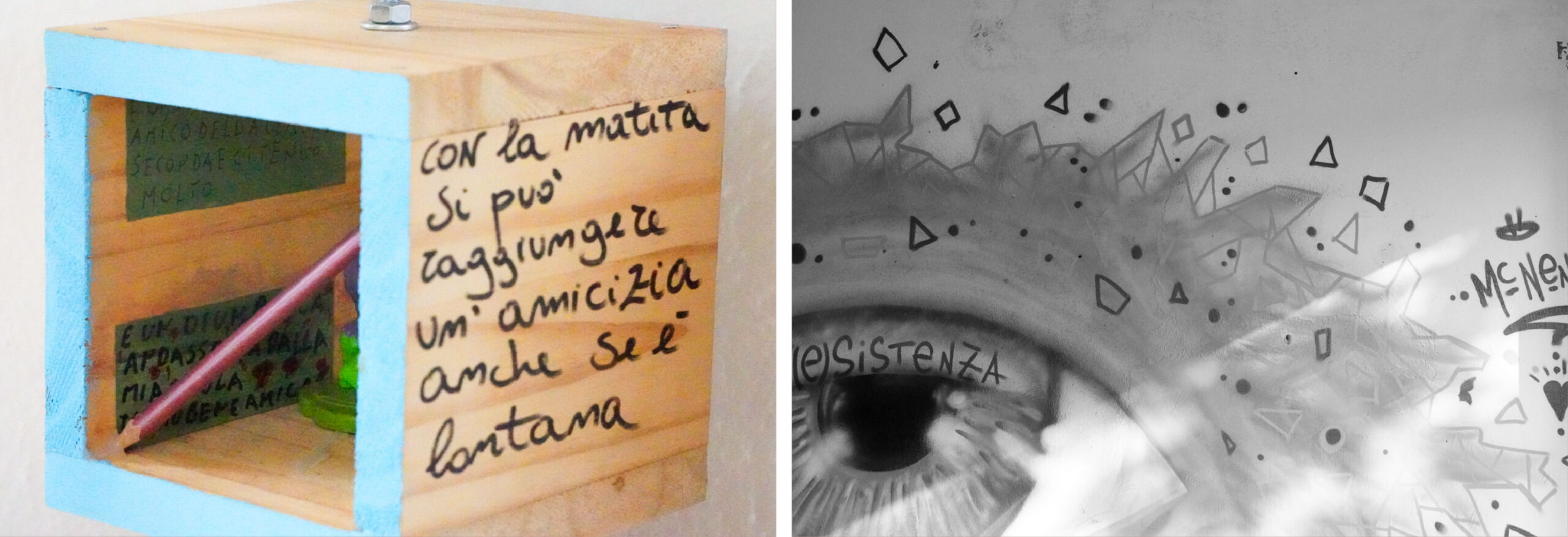
Later, the class visited a local community art space. There, Sophia saw an exhibit that stayed with her: small boxes filled with the children’s personal objects, such as pencils, books, and handwritten notes of hope. Sophia found that art was not just an outlet for personal expression, but an opportunity for engagement—a chance to enter into relationships with people in a broader community and make space for their stories. The exhibit inspired her midterm project, a photographic essay film about Scampia’s past and future.
A New Artistic Vision
Back in Shanghai, Sophia approached her creative projects with renewed clarity. Her work, now rooted in individual experience, began reaching outward toward others and broader social issues.
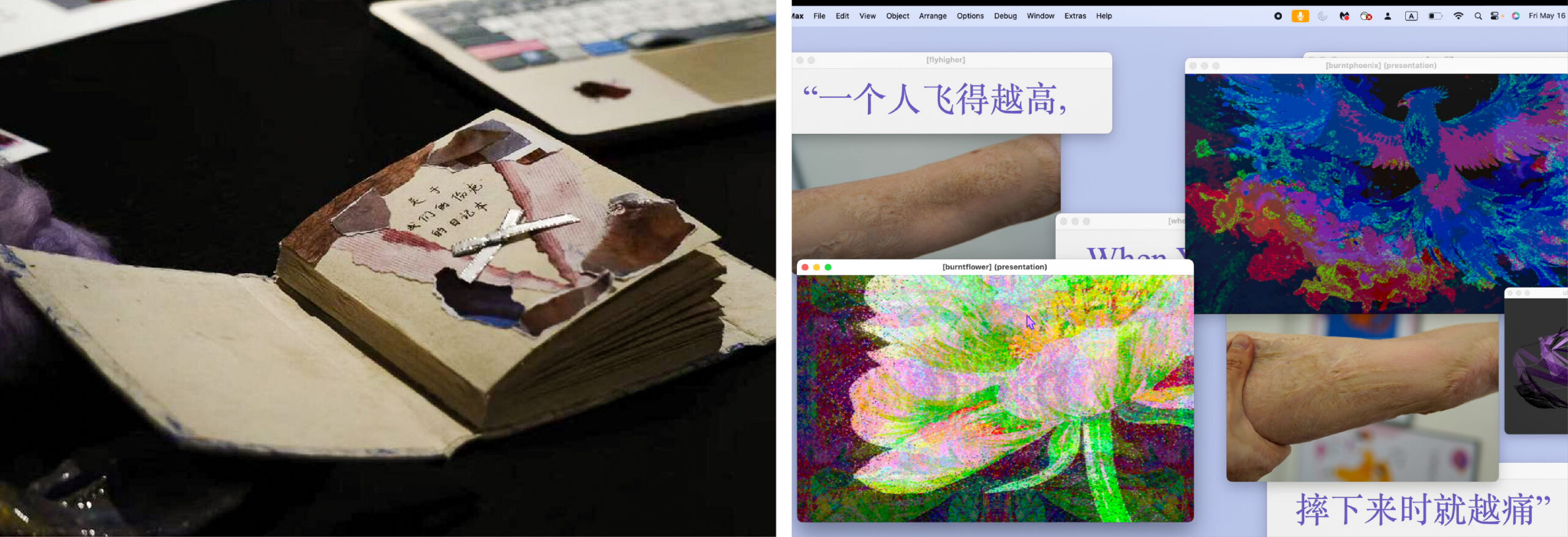
A scar from a childhood accident inspired one of her most defining projects. She decided to start collecting “scar stories” from people in the community around her and from people on social media. Throughout the process, she learned that some had been mocked for visible differences. At the same time, others had survived accidents that reshaped their lives. She gathered these intimate narratives and transformed them into a project titled Wounds X Possibilities, presented as a diary accompanied by a live coding performance. “It made me question whether something I thought was meaningful was actually just self contained,” she says, “Could it resonate beyond a small circle?”
The answer, increasingly, came from the people she met beyond campus. As her artistic direction became clearer, so did her sense of conviction. She co-created an installation addressing menstrual stigma and period poverty, inviting public interaction through a “sanitary pad message wall.” Sophia then reconnected with a woman who participated in Wounds X Possibilities and worked in autism inclusion. They partnered to create an exhibit that provided a space where children with autism could display their artwork.
Leaning into the Unknown
Sophia admits she often felt anxious early in her college career, measuring herself against her peers and feeling uncertain about the future. But exposure to alternative paths changed her perspective. Many of the people she met through her projects were not bound to a single job or trajectory. Instead, they navigated multiple roles, combining creative work, social engagement, and entrepreneurship. “It made me realize my path could be much broader than I thought,” she says.
This fall Sophia will pursue a master’s degree in digital creativity with the Erasmus Mundus scholarship, studying at three different universities in France, Portugal, and Poland. In the long term, she envisions a mobile lifestyle filled with traveling, artist residencies, and working on her own designer brand.
“I know I can be an artist,” she now says confidently. “I know I can build a life around what I want to do.”
This story was first published by NYU Shanghai. We thank them for allowing us to share it, and we invite you to read the full version here.
Related
At NYU Shanghai, Reconnecting Across Generations
A Gallatin senior used his time at NYU Shanghai to reconnect with his family's story and document his grandmother’s 90-year legacy.
The Ultimate NYU Shanghai Dining Guide
Learn all about the plethora of NYU Shanghai dining options in our ultimate guide to the best eats on campus.
In Shanghai’s Thriving Arts Scene, Masha Shramko Found Her Passion
From frequent gallery visits to art history coursework, research projects, and even a part-time job at the NYU Shanghai Institute of Contemporary Arts, art is central to Masha Shramko's college experience.