

Language learning can unlock new perspectives, professional opportunities, and connections with cultures and people from around the world. At NYU, you’ll have access to classes spanning 40 languages, either in New York City or at one or more of our many global locations. Whether you want to expand your ability to communicate with others, fulfill your curiosity about a different place or language, or simply meet your program requirements, here’s a bit of what you can expect when studying a language at NYU.

Types of Language Classes at NYU
At NYU, language classes are offered at elementary, intermediate, and advanced levels. Elementary I and II classes teach fundamental vocabulary, basic grammar, and language patterns. Intermediate I and II courses review more complex grammar and language structures as well as culture. They concentrate on fluency and accuracy through listening, speaking, reading, and writing. Intensive courses, which provide two semesters’ worth of learning in just one semester, exist for several languages at the elementary and intermediate levels.
“The first year is the hardest, and then it gets more interesting. The results come with consistency,” advises Daria Masyukova, who is a double major in Art History and French with a minor in Creative Writing. “You didn’t even learn how to speak your own language until a certain age, so be patient with a foreign one!”
Advanced classes are broken down into grammar and composition, conversation, translation techniques, professional topics (like business and health), and creative writing. Many advanced language classes combine classroom study and community engagement. For instance, Living in French in North America explores the linguistic and cultural diversity of Francophones in New England and Canada. As part of NYU Alternative Breaks, students travel to these regions to interact with native speakers. Generally, NYU language classes are on the smaller side, allowing you to receive individualized attention as you learn.
Where in the World Can I Study Languages?
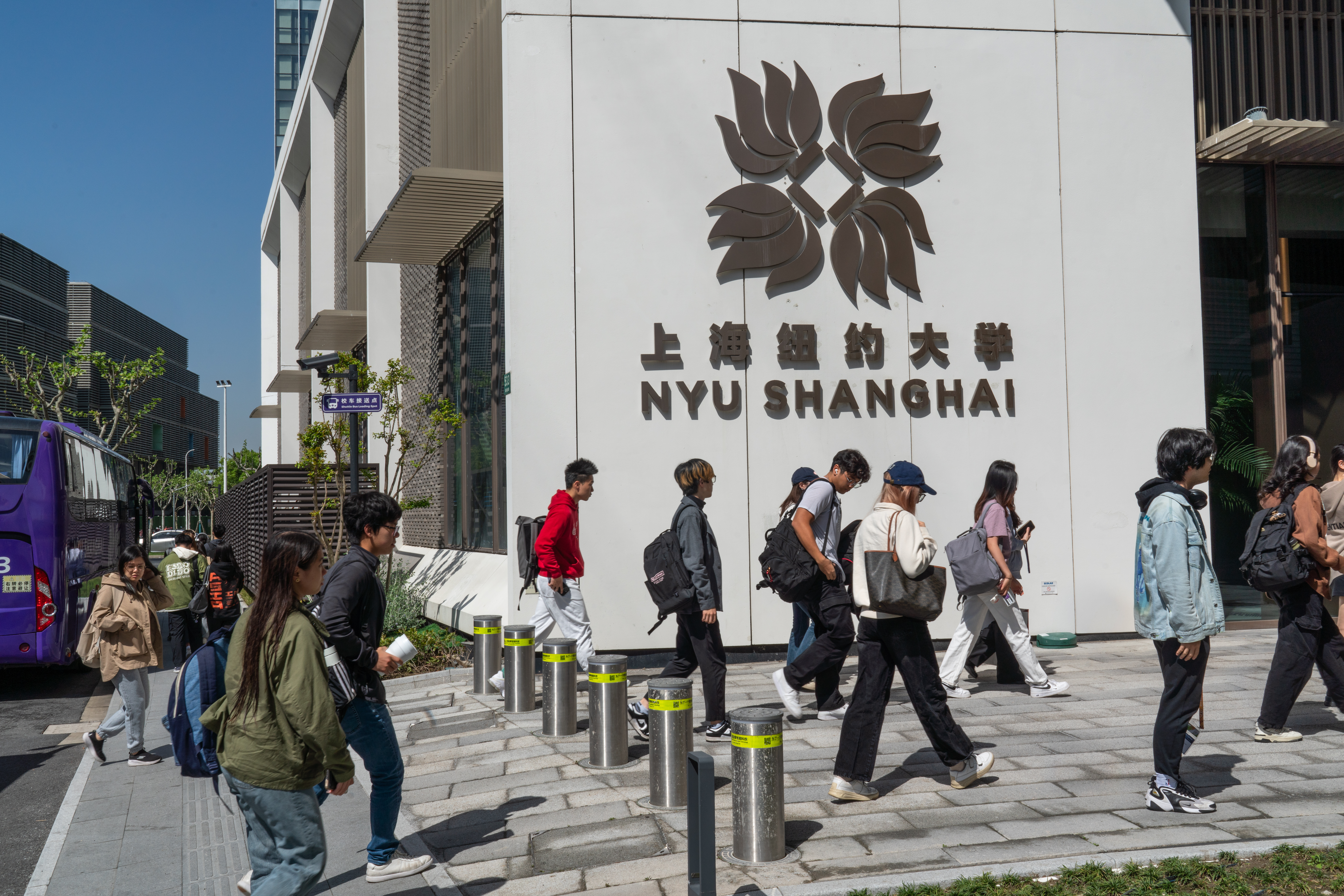
Within NYU’s global network, language classes are available across six continents, and studying away offers invaluable language practice and cultural experiences. Beyond traditional study away opportunities, NYU offers various immersive language programs, including a nine-week Summer Chinese Language Immersion Program at NYU Shanghai.
“Not only was I in a completely new culture, but I also got to make some of the most long-lasting memories, including a 16-hour train ride with a friend to travel to Zhang Jia Jie!” recalls program participant Wendy Benitez Jaramillo, a Business and Political Economy major at the NYU Stern School of Business with minors in Chinese and Environmental Humanities.
Classes on less commonly taught languages, such as Bengali, Ukrainian, and Nahuatl, are offered through language exchange programs with Columbia University and CUNY Mexican Studies Institute at Lehman College. Here are language-learning opportunities available through NYU:
- Abu Dhabi: Arabic • Chinese (Mandarin) • French • Japanese • Spanish
- Accra: Twi
- Athens: Greek (Modern)
- Berlin: German
- Buenos Aires: Spanish
- Dublin: Irish
- Florence: Italian
- Madrid: Spanish
- New York City: Akkadian • American Sign Language • Ancient Egyptian • Arabic • Aramaic • Bengali • Bosnian/Croatian/Serbian • Cantonese • Chinese (Mandarin) • Czech • Farsi/Persian • Filipino/Tagalog • French • Haitian Kreyòl • German • Greek (Ancient) • Greek (Modern) • Hebrew • Hindi • Indonesian • Irish • Italian • Japanese • Korean • Latin • Mixtec • Nahuatl • Polish • Portuguese • Punjabi • Quechua • Russian • Sanskrit • Spanish • Swahili • Turkish (Modern) • Ukrainian • Urdu • Yoruba
- Paris: French
- Prague: Czech • German • Polish • Russian
- Shanghai: Chinese (Mandarin) • French • Spanish
- Tel Aviv: Arabic • Hebrew

Exploring Language and Culture on our New York City Campus
For first-year students passionate about languages, Lipton Hall offers two language-related floors in New York City: L’Étage Français and Vivir en Español. Respectively welcoming French and Spanish speakers of all levels, each community hosts relevant cultural trips and activities throughout the year.
Several NYU centers also host cultural events focused on specific languages and regions of the world. For example, La Maison Française sponsors lectures, concerts, screenings, exhibitions, and festivals that attract many French speakers. “La Maison Française is an amazing place for everyone who studies French, and you can connect with other students and the faculty in a very informal way,” shares Daria. “Every single time I’ve been there was great.”
Similar NYU cultural centers include:
- Center for Latin American and Caribbean Studies
- Casa Italiana Zerilli-Marimò
- Espacio de Culturas
- Deutsches Haus
- Hagop Kevorkian Center for Near Eastern Studies
Even in your daily life at NYU, there are many ways to surround yourself with another language, from music to TV shows to YouTube to online news sites. Whatever media you enjoy in English or your mother tongue, you can always find something similar in another language. “I tell people Bad Bunny got me into Spanish,” says Sport Management major and Spanish minor Niko Spiridellis. “I urge students to let him or other artists spark their curiosity as well.”
Related

Yes, You Can Study Languages!
When it comes to studying languages in college, knowing how to make the most of it can be difficult. Read along for tips on how to start!

Homestays Offer NYU Students an Immersive Language Experience
NYU students who choose to live in homestays while studying away find the unique, immersive language experience beneficial.
The Language and Mind Major at NYU
Examine the mysteries of the human mind through this interdisciplinary program.