Published April 29, 2026
NYU’s Hidden School: What Every Science Major Should Know About Global Public Health

When I first committed to NYU as a nursing major, I knew I was interested in public health, but I wasn’t sure what that actually meant. As I continued my studies and changed my major to Nutrition & Dietetics, I learned about NYU’s School of Global Public Health (GPH). Originally part of Steinhardt, GPH became its own school in 2015. Now, students can major in Global Public Health alongside a variety of other majors. Adding GPH to my nutrition education has exposed me to new jobs and industries, educated me about important issues in healthcare, and given me a global perspective that has greatly added to my science-based knowledge. I would encourage any prospective or current students majoring in science (or other fields) to consider double majoring in GPH.
What is Global Public Health?
NYU’s School of Global Public Health was originally part of Steinhardt before becoming independent in 2019. Today, it offers an undergraduate major in Global Public Health as well as many Master’s and PhD programs. Undergraduates majoring in GPH must pair it with a second major in another school. There are currently 13 accepted co-majors. I am part of the Global Public Health and Nutrition & Dietetics program, but I have friends in many of the other co-majors who have had great experiences. Because GPH is its own school, you are still considered a true double major, with a separate advisor for the GPH curriculum and access to unique resources.
Academic advantages
What I love most about GPH is the well-rounded education it provides. Many of my Nutrition & Dietetics classes are very STEM and clinically focused, while most GPH classes are more humanities-based. This has made my education feel more holistic. As someone who is stronger in humanities than science, it has also helped balance out some of my lower STEM grades. More importantly, I have learned so much about systemic issues in healthcare, both in the U.S. and worldwide. These are topics I likely never would have been exposed to otherwise. It has given me a deeper awareness of the system I hope to work in and has shaped not only how I will treat patients, but also how I approach everyday interactions and choices.
One example is my favorite class, Ethics of Reproduction, a GPH elective focused on current and historic issues in women’s and reproductive health. We had weekly discussions and debates about complex questions, and what I learned from both the material and my peers was extremely eye-opening. I feel much more educated about inequities in the healthcare system and the social determinants of health. I am also more aware of what I don’t know and where I can continue educating myself.
The GPH school also has extremely accomplished professors who bring valuable real-world experience into the classroom. For example, one of my favorite professors shared her experience working as an epidemiologist in Flint, Michigan during COVID, which was very impactful to hear about firsthand. I often find myself understanding ideas in my nutrition classes more deeply because I can connect them back to concepts from my GPH coursework. This interdisciplinary education has helped me as a student and will be beneficial when applying to graduate programs and jobs, as it demonstrates a deeper understanding of the social aspects of healthcare.
Post-graduate and career opportunities
Despite being relatively new, GPH offers many unique post-graduate opportunities. There is a 4+1 program that allows students to complete their undergraduate degree and an MPH simultaneously. The school also offers direct admission to the NYU MPH program for students who meet certain academic requirements through the Direct Entry Pathway. Additionally, all GPH students must complete an Experiential Learning course in order to graduate. Through this course, students are matched with internships in the field, meaning every graduate is guaranteed professional experience. There are also many research projects within GPH, and professors often involve students in their work. I highly recommend going to office hours and learning about your professors’ research. You may make a valuable connection or discover an amazing opportunity.
Adding GPH to your studies also widens your career options. Public health is a rapidly growing field with many emerging opportunities. Courses like Epidemiology introduced me to career paths I likely wouldn’t have considered otherwise. Many classes also teach practical skills that are applicable across industries. For example, I learned to code in R in my Biostatistics for Public Health course. I never would have pursued that skill on my own, but I’m grateful to have it in my toolbox now.
Other GPH perks
The GPH school also offers a few additional unique advantages. All GPH students are required to study away for one semester, which is seamlessly built into the curriculum. Students can even complete internships while studying away. For example, I was given the opportunity to help with a biostatistics research project while studying away at NYU Abu Dhabi through my enrollment in the GPH school. That being said, you can waive the requirement if necessary. I didn’t end up studying at NYUAD due to extenuating circumstances, and my advisor waived the requirement for me. However, many GPH students have completed cool opportunities like this.
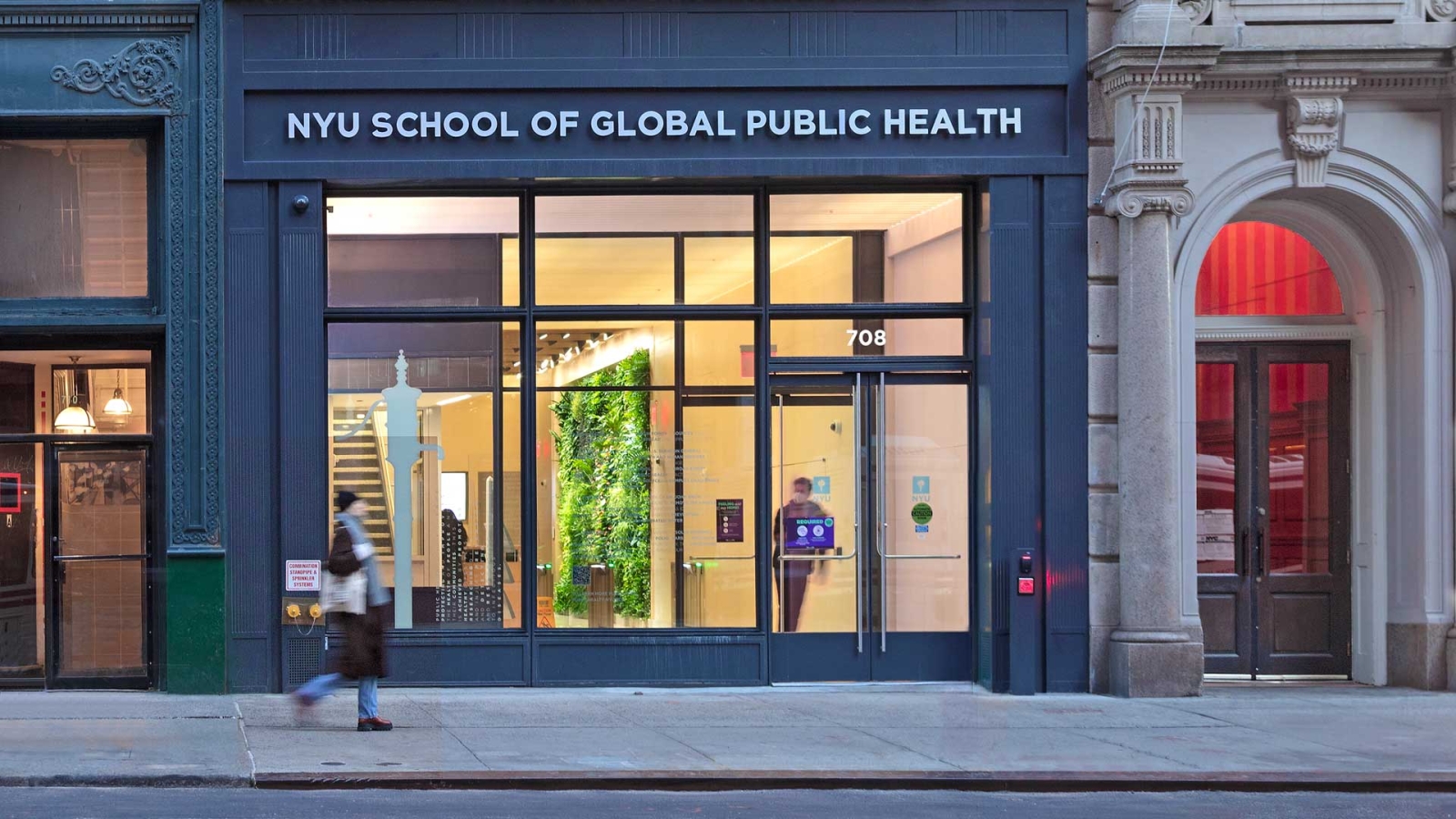
The GPH building at 708 Broadway is also an underrated gem on campus. Because the school is so new, the building is modern and spacious, with over 7,000 square feet of dedicated study space, lounges, and reservable private rooms. It has become one of my favorite places to study. There are also several GPH-specific clubs, such as Black Public Health Network, EPIC (Epidemiology, Prevention, Intervention, Control), Health in All Policies Advocacy Network, Nutrition without Borders, and Women in Medicine. These organizations provide great ways to connect with like-minded students interested in specific areas of public health.
I am so happy with my decision to study Global Public Health at NYU. An education in public health has given me a unique and holistic perspective on our healthcare system. It has deepened my understanding of systemic inequities and cultural differences, which will allow me to serve patients with compassion and cultural competence as I prepare for my future career as a Registered Dietitian. I have also been introduced to post-graduate opportunities I would not have known about otherwise. I strongly encourage any current or prospective science majors to consider this meaningful addition to their NYU education.
Related
Explore the Global Public Health and Nursing Major
The joint Global Public Health and Nursing major gives students a broader view of individual health as well as global health systems and challenges.

Studying Global Public Health Amidst a Global Pandemic
A student reflects on her experience over the last few semesters majoring in Global Public Health during the global COVID-19 pandemic.
Understanding Global Public Health Undergraduate Majors
If you’re interested in global public health, you’re not alone in being a bit confused by it. I hope this article will help answer some of your questions.