Published September 03, 2025
At NYU Florence, a Greener Way to Study Abroad
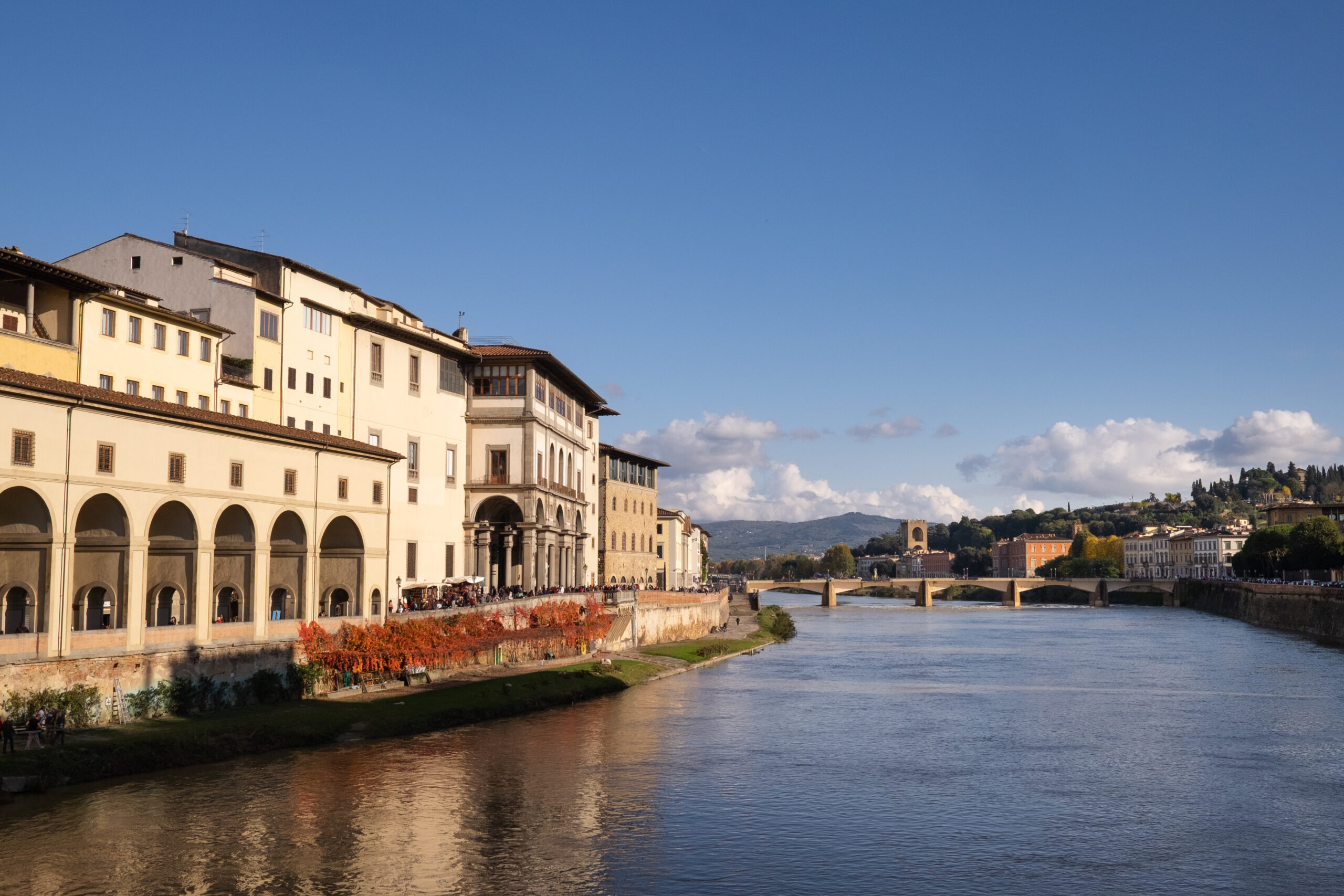
It’s not hard to see why NYU Florence is such a popular site for study abroad. The 560-year-old, 37-acre La Pietra estate feels worlds away, with historic villas, formal gardens, and a community farm. Here, you can spend your mornings walking through olive groves and afternoons studying under the cypress trees. But it’s not just the scenery that makes the experience memorable. NYU Florence is home to the Terra Firma program, a sustainability initiative where students dig into everything from gardening to cooking with campus-grown produce.
For centuries, the estate operated as a self-sustaining agricultural property. Today, that legacy continues, with plenty of ways for students to get involved. “Florence’s deep history and vibrant culture—and NYU Florence’s curriculum—drew me to study abroad here,” says Irene Park. She’s a Business major with a concentration in sustainable business. “When I saw there was an opportunity to contribute to sustainability on this beautiful campus, it just made sense for me to apply.”
Get Your Hands Dirty
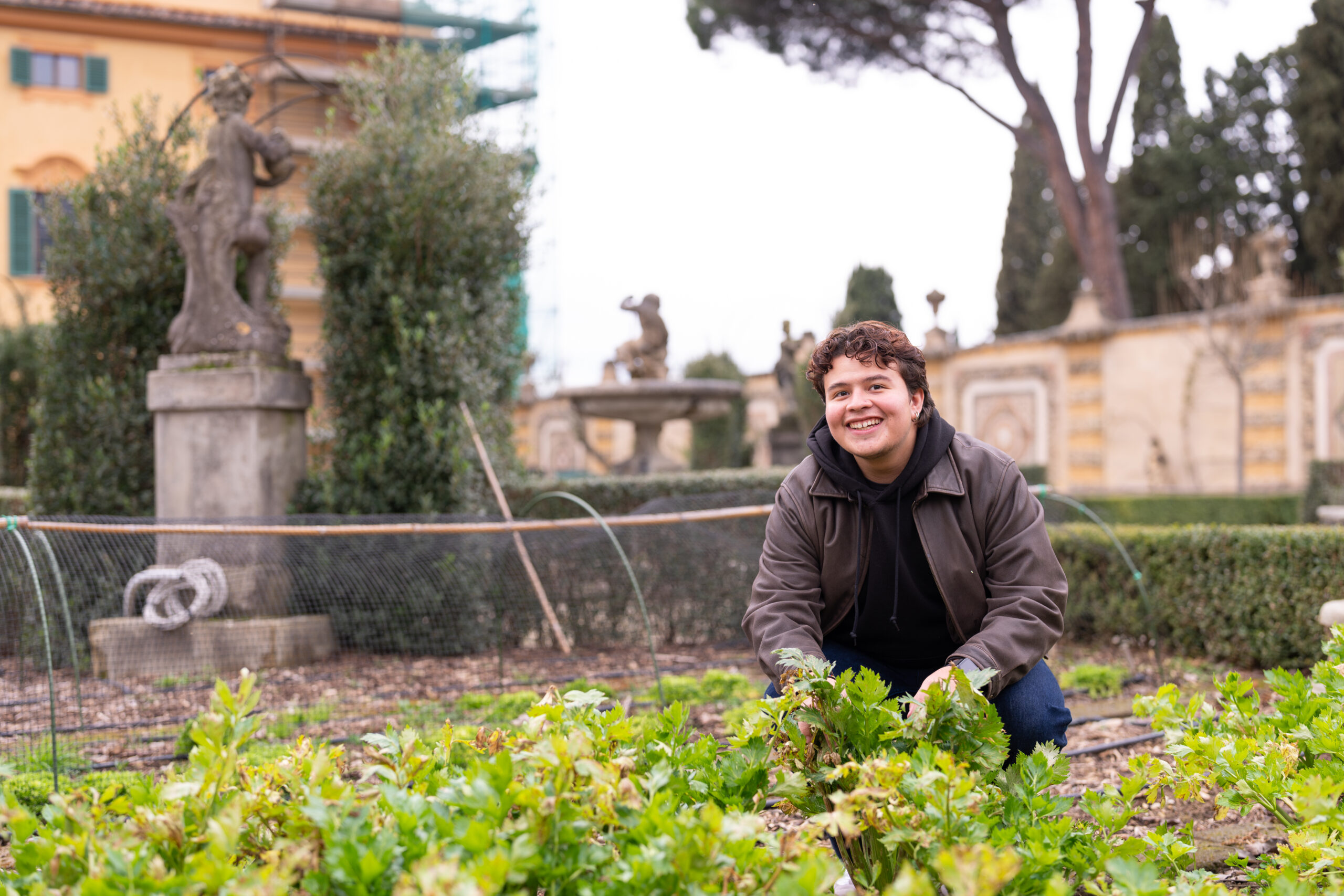
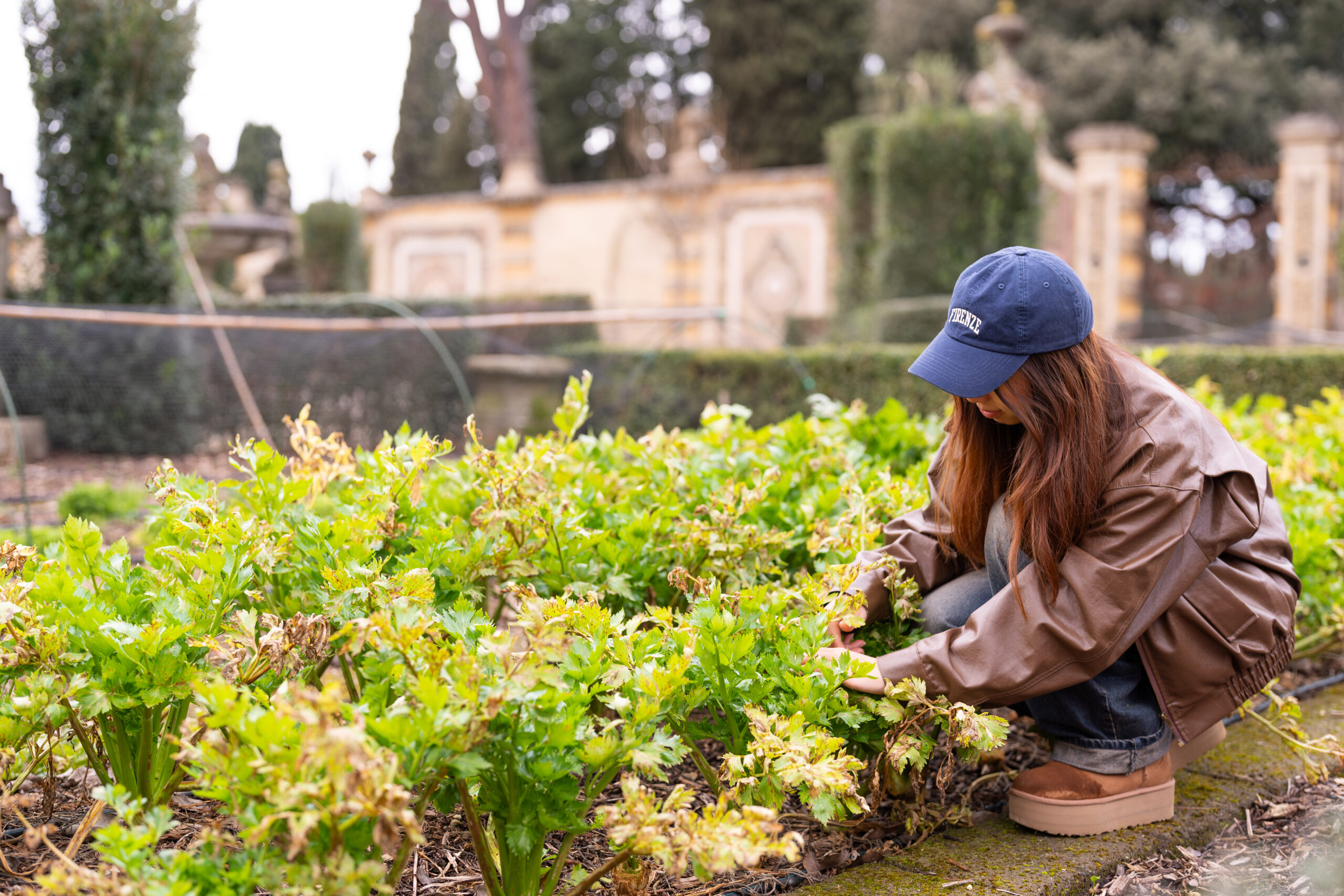
One of the main ways students connect with sustainability is through the gardens. From planting and weeding to harvesting seasonal vegetables, students contribute to the food that ends up on their plates. The estate includes an olive grove with more than 2,600 trees as well as vegetable plots and flower beds. Additionally, there’s a walled kitchen garden, or pomario, with over 100 lemon and orange trees. Each year over half the students take part in the olive harvest. The oil they help produce is bottled, with marketing students designing the label and submitting it to a panel of judges. In fact, this olive oil won a coveted local prize for the best olive oil in 2023!
Most days, something from the gardens is on the cafeteria menu. Furthermore, the villa’s organic waste is composted on site and reused in the formal gardens and vegetable plots. “I think the garden-to-cafeteria model is a super cool way that NYU Florence emphasizes sustainability,” says Chocoria Jiang. She’s double majoring in Economics and Environmental Studies and studied away in spring 2025. “The produce grown on campus is directly used to feed the students!”
Learn by Doing
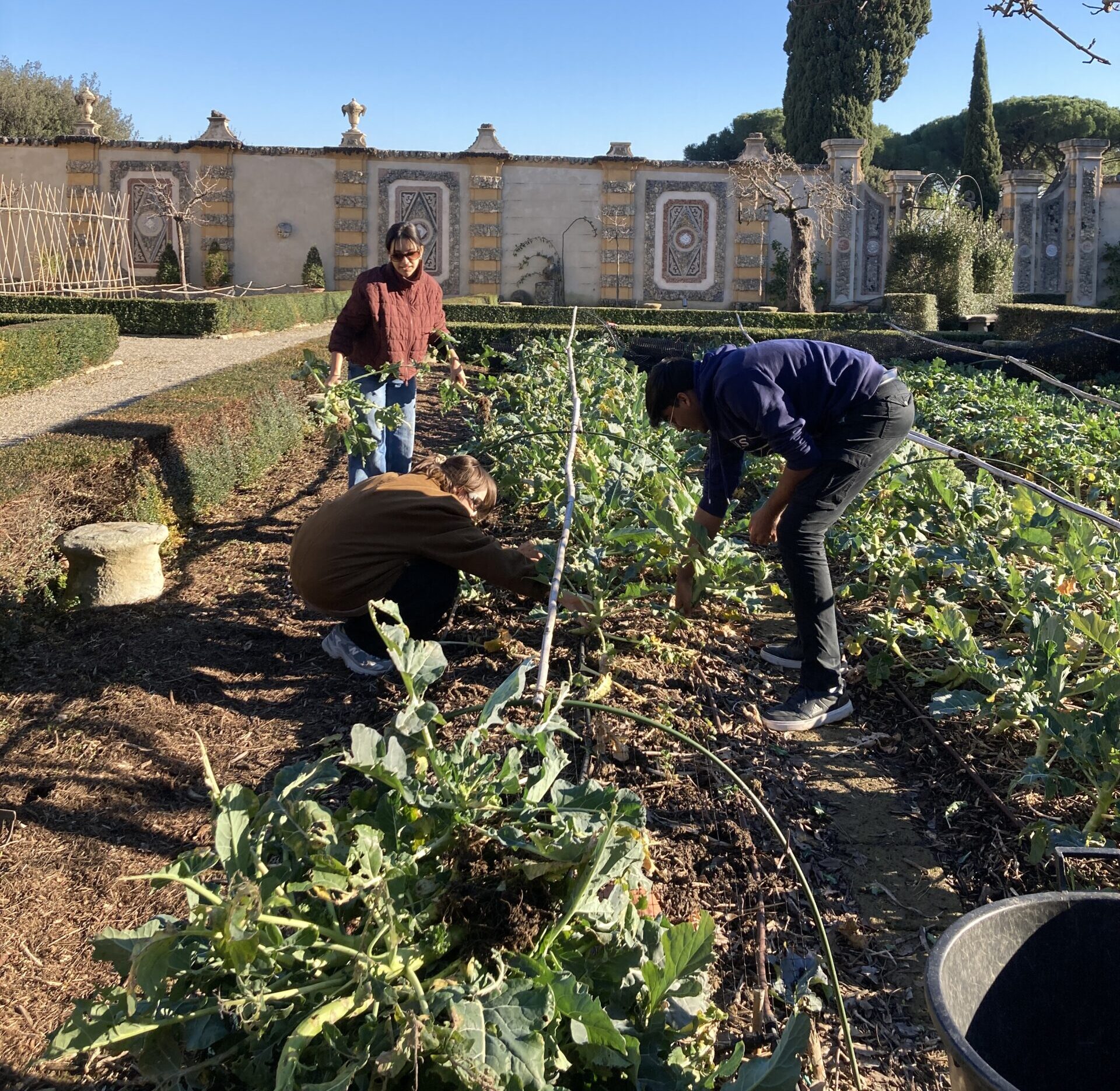
Many classes use the gardens as a living laboratory. Marketing students propose their own lemon-based beverages, while photography students document the grounds. Theatre students have even joined garden clean-up efforts around the estate’s open-air theater, where they later perform. Finally, food-related classes explore diverse topics from the Mediterranean diet to food and immigration.
Students who want to go deeper can apply for professional development opportunities (PDOs) to work alongside NYU Florence staff on campus-wide projects. “In the beginning I mainly did weeding because there were a lot of weeds from the past semester,” says Eduardo Silva. His PDO took place in the vegetable garden. “But over time it turned into planting, organizing, and preparing the garden for events.” As an NYU Gallatin student studying international food business and agricultural systems, the experience helped him get direct experience with Tuscan gardening practices and new techniques. For instance, “no dig,” a method of growing crops with minimal soil disturbance, reduced the need for water and fertilizer.
“Getting involved in the sustainability efforts of the campus I went to every day helped me appreciate and cherish NYU Florence. By letting students make positive change to their own community, green initiatives allow the campus to become a place with a personal connection.”
—Irene Park, Business major at NYU Stern
Savor Sustainable Events
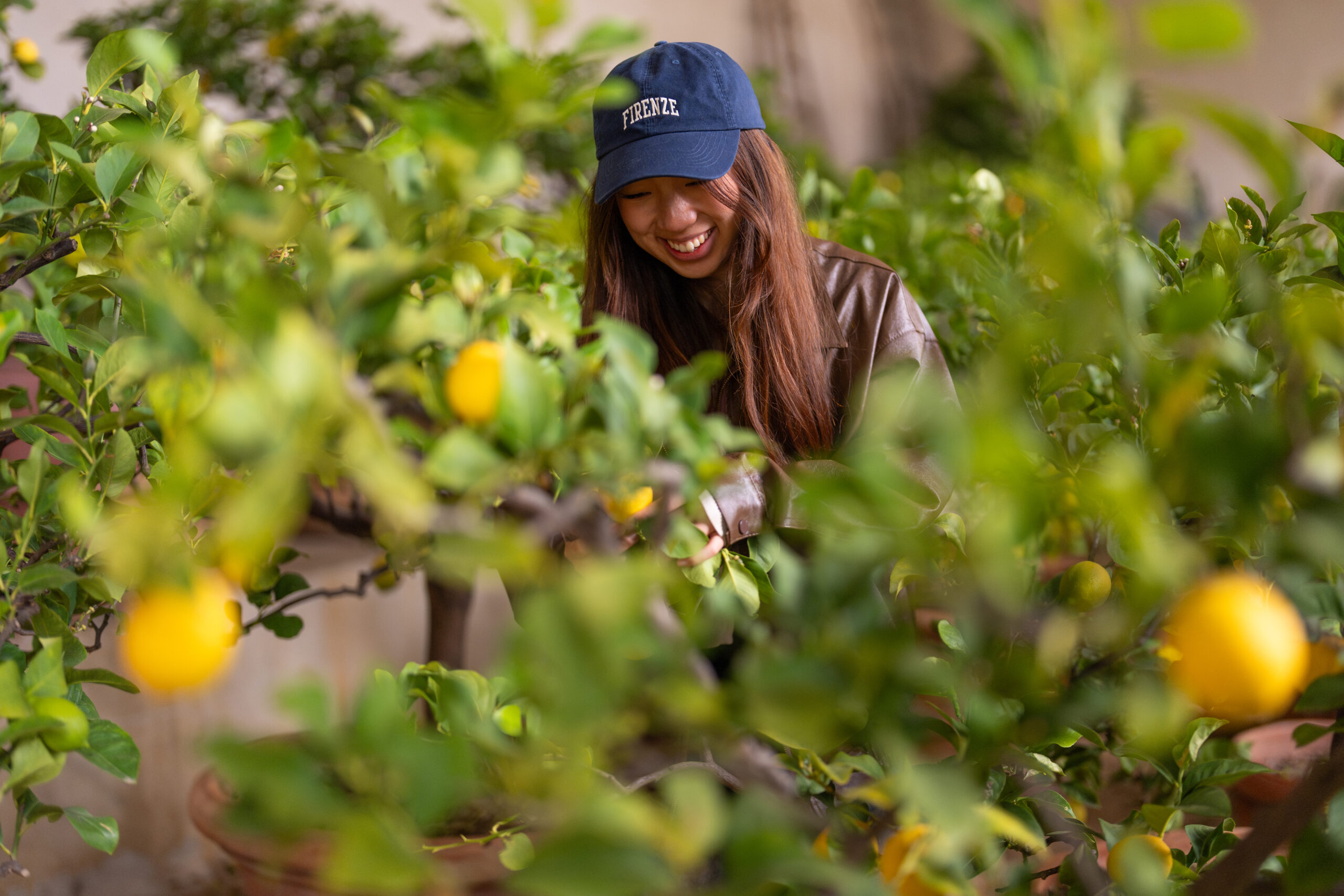
NYU Florence students don’t just grow food—they celebrate it. One beloved tradition is Lemon Day, an event inspired by the Medici family’s historic love for citrus fruits. Students harvest fruit alongside local school groups, learn about citrus cultivation, and enjoy a themed lunch and citrus ice cream in the pomario. “It was a lot of citruses—and a lot of fun!” shares Eduardo. In addition, workshops and panels bring students together throughout the semester. There are cooking classes, speaker series, and sustainability-themed celebrations. What’s more, students have practiced M’illumino di Meno, a national energy-saving initiative, and joined NYU 2040 Now, a week-long series of climate-focused events.
Find a Space to Grow
Just being in such a lush environment can be transformative—and all three students agree it’s an experience worth having. “Getting involved in the sustainability efforts of the campus I went to every day helped me appreciate and cherish NYU Florence and the people there even more,” says Irene. “By letting students make positive change to their own community, green initiatives allow the campus to become a place with a personal connection.”
Working in the gardens can also be a welcome mental break. “It’s a nice way to get mental clarity—especially during midterms or finals,” Eduardo adds. “It’s really beneficial to talk to other people or be at peace, listening to music while planting or pulling weeds.” Chocoria agrees: “Above all I learned that no matter where I go, I can make a strong impact as long as I put my mind to it. Big results come from the combination of lots of small and seemingly behind-the-scenes work.”
Related
NYU First Year Away: Florence Edition
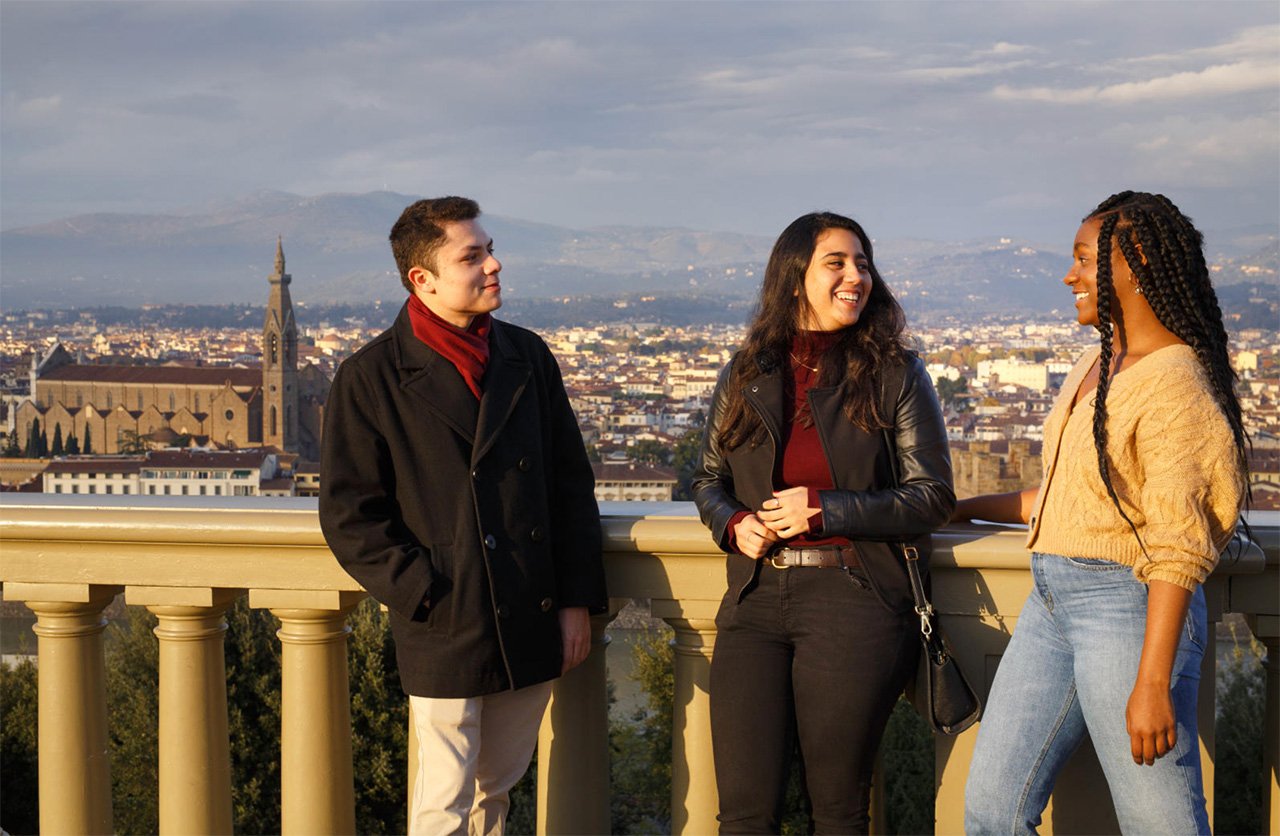
NYU First Year Away is a unique experience for Liberal Studies students, in which they can spend their first year of college at one of our global sites.
NYU Students Tackle Climate and Sustainability Across Continents
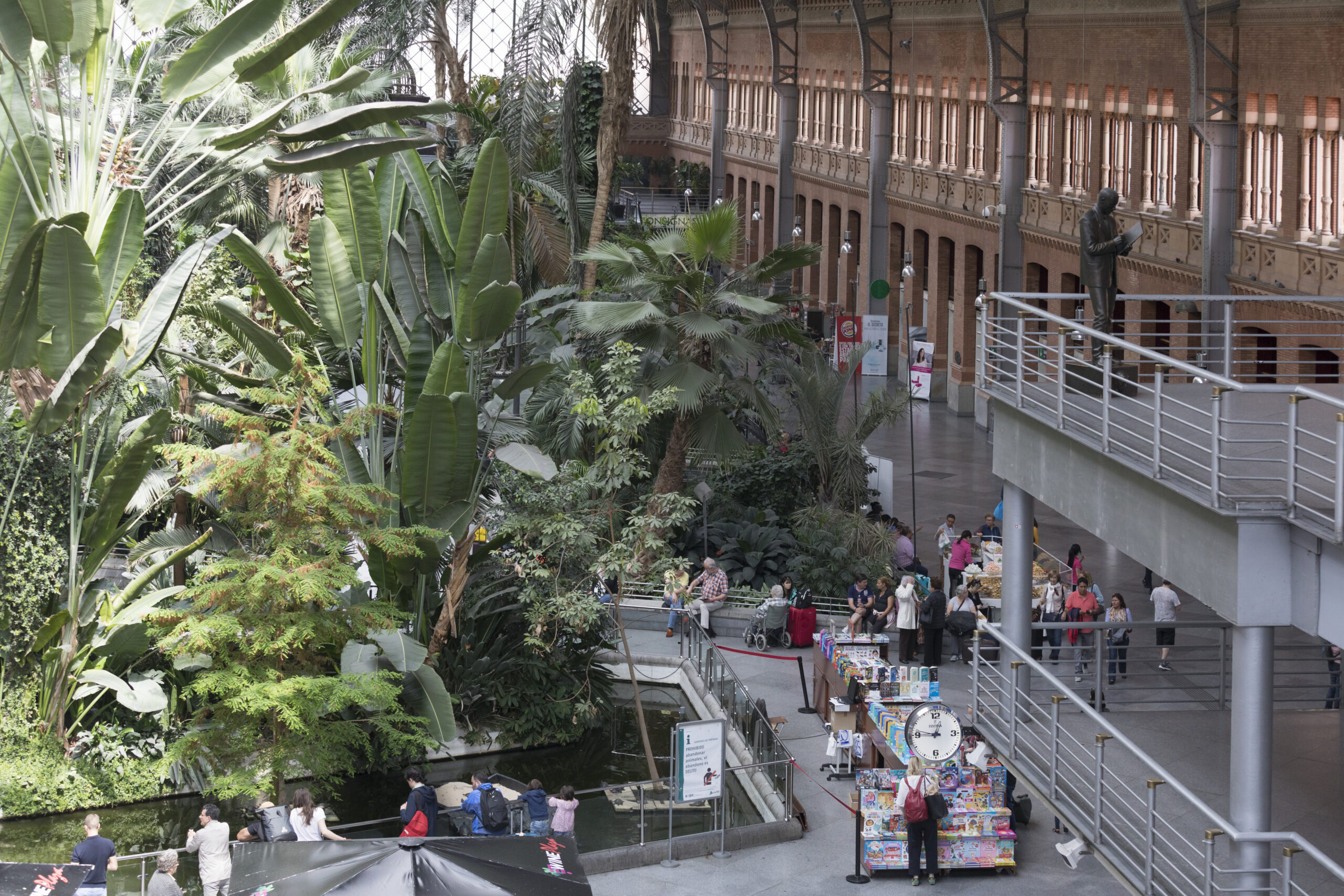
NYU students are passionate about climate and sustainability, and they take that commitment with them around the world.

NYU Sustainability: On Campus, in the Classroom, and Beyond
NYU’s chief sustainability officer talks about what NYU and its students are doing to contribute to a sustainable future.