Published April 16, 2026
You’ve Got a Friend Abroad: NYU’s Global Student Leaders


Studying abroad is a once-in-a-lifetime experience, but it’s also a monumental leap. While thoughts of wandering the streets of Paris or shopping at markets in Accra might be exhilarating, it’s normal to feel some predeparture jitters. But at NYU’s global sites, you’re never alone in your journey. Here, a dedicated network of student leaders acts as the bridge between you and your new city. They’re guides, friends, travel agents, and mentors who turn an unfamiliar city into a second home.

Your Guides to the City
So, who are these student leaders? While their titles vary, their mission is the same: Making sure every student feels seen and supported while abroad.
Intercultural learning fellows (ILFs) foster community through cultural immersion. Madison James is a Business major at NYU Stern School of Business with concentrations in marketing and management. She’s also an ILF at NYU London. She plans events that highlight the city’s diversity, like visits to queer-owned bookstores or Indian cooking classes. At the same time, she hosts drop-in sessions for students “if they need help adjusting or simply want to chat.”
Peer mentors live in residence halls to support the transition to life abroad. Isabella Eustate, an NYU Stern student concentrating in finance and marketing and minoring in Dance, is a peer mentor at NYU Madrid. She helps students navigate the city, recommending cafes or study spots. “I wanted to help create a sense of belonging and make the transition smoother from the start,” she explains.
Finally, site ambassadors serve as the voice of their location. Sarah Tapal is both an ILF and a site ambassador at NYU Accra. She’s majoring in Nutrition and Food Studies on the premed track at NYU Steinhardt School of Culture, Education, and Human Development. “I truly believe Accra is a wonderful site that not many people know about,” she says. “I hope to spread more awareness while also representing students’ concerns, planning events to explore local culture, and building community.”

Leadership Based on Experience
These student leaders are uniquely qualified because they have been here before—so they know exactly where you’re coming from. “What initially drew me to becoming an ILF was my own experience studying away in both Madrid and Buenos Aires without fully knowing what to expect,” says Jonathan “Jon-Jon” Cajamarca. He’s a Global Public Health/Global Liberal Studies major who studied away at NYU Madrid and NYU Buenos Aires. “Studying away in Madrid was the first time I lived outside the United States. While it was exciting, it was also disorienting. I quickly realized how impactful peer support can be,” he says. Now an ILF at NYU Buenos Aires, he guides the new cohort: “I can help students who may feel overwhelmed or out of place at first.”
Sarah shares that sentiment. “A welcoming, respectful, and collaborative community is essential for students adjusting to a new environment and culture,” she says. “At NYU Accra, I hope to serve as a bridge by helping peers feel both supported and empowered as they navigate cultural transitions.”

The Path to Leadership
For those interested in becoming a student leader abroad, these roles offer a way to grow professionally and personally. ILF and peer mentor roles are selective, paid positions (with fellows eligible to earn up to $2,000) that involve an application and video interview. While site ambassadors are volunteers, the position includes a budget to facilitate events and the chance to liaise directly with the Student Government Assembly.
Don’t let the titles intimidate you. As Madison notes, you don’t have to be an expert to lead. “Some people might not expect that we are learning about London like they are. The fun part is getting to experience and learn about this city together.”
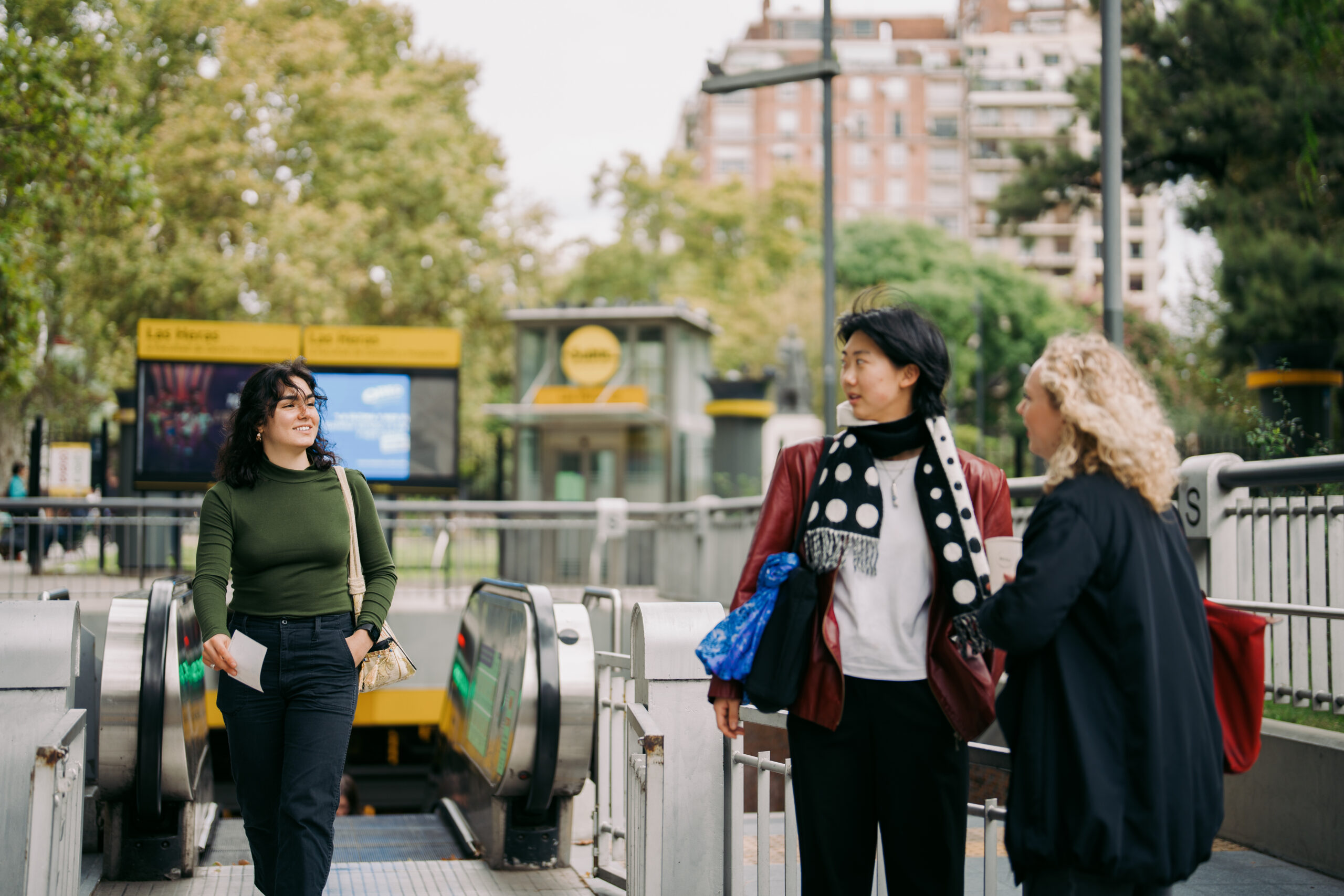
Find Your Place Anywhere
Ultimately, these roles ensure that the unknown is more exciting than scary, and that no student feels like an outsider. “Beyond organizing events, the main part of the role is supporting students and helping build a sense of community in the dorm,” says Isabella. “This means being attentive to how people are adjusting, creating an environment where students feel comfortable, and helping them connect with each other. A big part of it is simply being approachable and present so people know they have someone they can turn to.”
By providing that safety net of support, student leaders help their peers navigate the learning curve of living in a new country. “Studying abroad is not about having a perfect experience,” adds Jon-Jon. “It’s about learning how to adapt, grow, and genuinely engage with the local culture.” With this network of support, entering a new culture becomes much more manageable. After all, says Sarah, “College is probably one of the best times in your life to have the chance to move to another country. That’s because NYU’s staff and peers will be there to help make the experience easier.”
Related
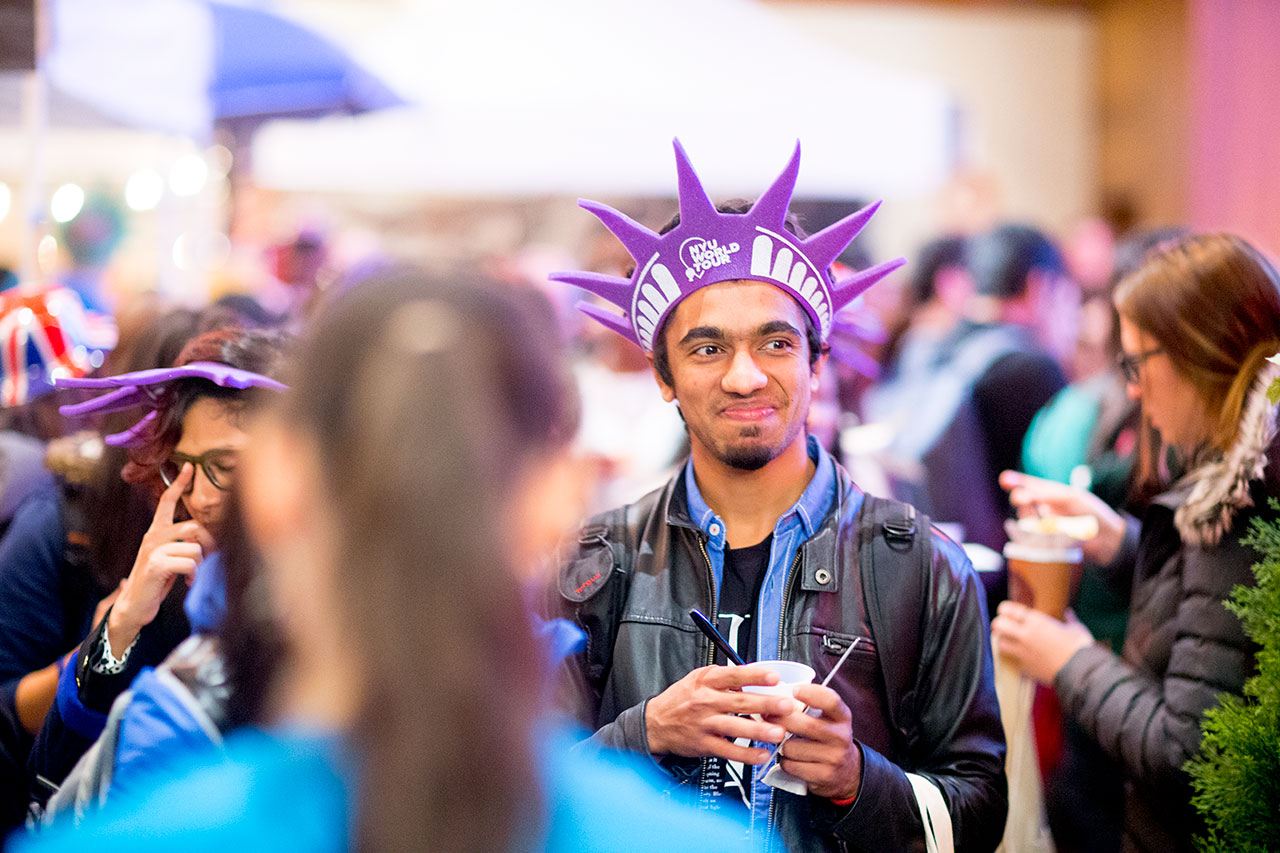
Start Planning Your NYU Study Abroad Experience
Each fall, NYU World Tour exposes students to an entire world of opportunity and exploration—and helps them start planning their study abroad experiences.

What They Don’t Tell You About Study Abroad
Studying abroad is an exciting experience for many students but you need to make sure you’re ready. Heidi shares her experience and advice on what to expect before you go abroad.

NYU’s Network of Support: A Guide
Related Posts Start Planning Your NYU Study Abroad ExperienceEach fall, NYU World Tour exposes students to an entire world of opportunity and exploration—and… What They Don't Tell You About Study AbroadStudying abroad is an exciting experience for many students but you need to make sure……