Published July 25, 2025
Build Your Legacy in Leadership and Service with ROTC at NYU

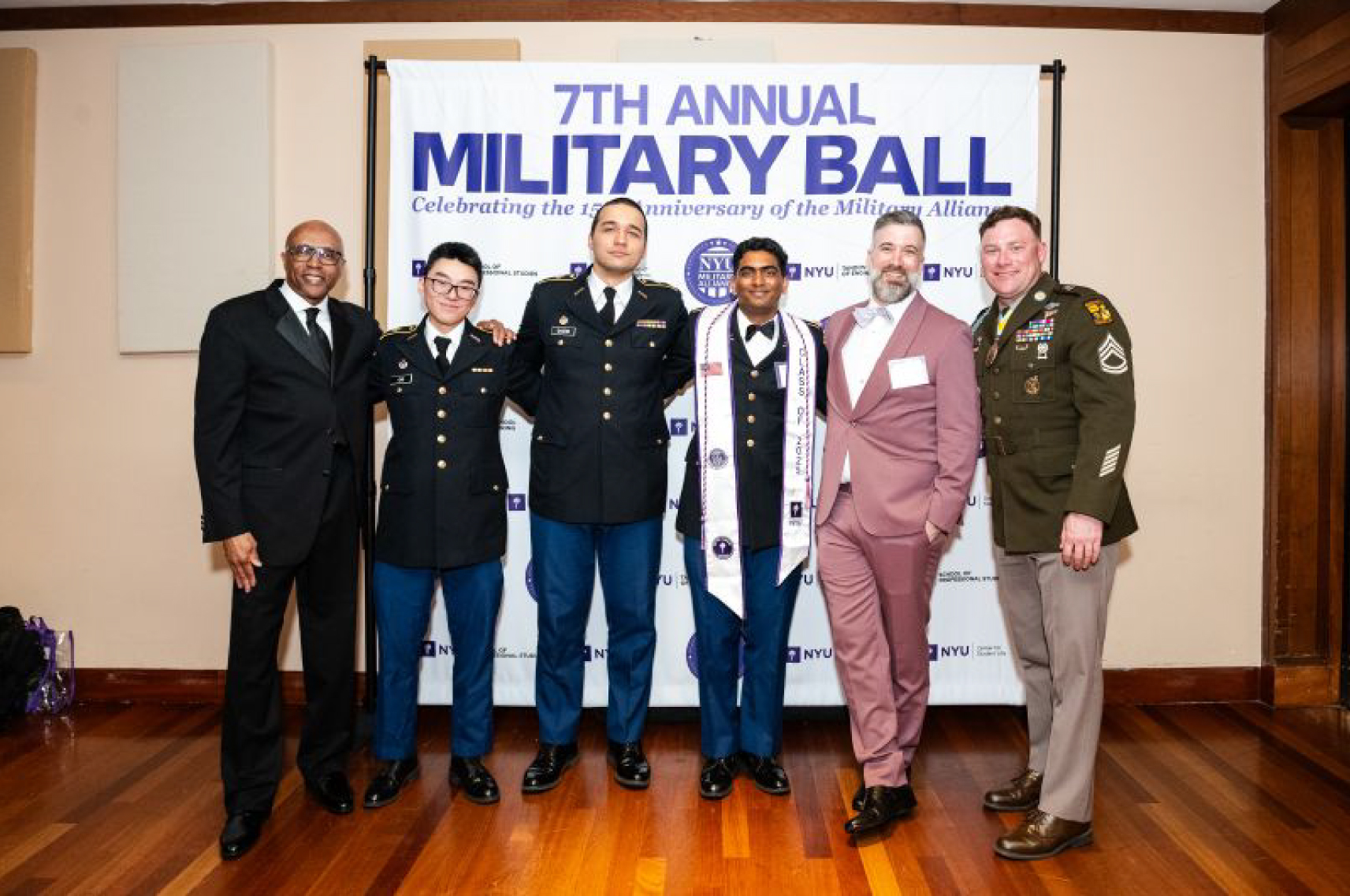
From a passion for service to expansive leadership opportunities, financial benefits to following in the steps of military family members, there are many reasons students choose to join Reserve Officers’ Training Corps (ROTC) at NYU. Regardless of your motivation, participating in ROTC at NYU sets you on a path toward success. And, with options in Army ROTC and Air Force ROTC (AFROTC), students of all backgrounds and all majors are encouraged to apply.
“I always had an interest in service to the country—especially as an immigrant to the United States,” says Army ROTC Cadet Rahul Mahesh. He’s a Politics major on the prelaw track at NYU College of Arts and Science (CAS). “I gained citizenship through naturalization—I wasn’t born with it. As a result, when I came to NYU, I was looking for ways to engage in public service. ROTC was at the forefront.”
So, what does ROTC at NYU really look like? We asked both Air Force and Army ROTC cadets from across the University to share their advice and experiences. Read on to learn more.
Study at Your Dream School
Sanders Pitts is a Music Business major at NYU Steinhardt School of Culture, Education, and Human Development and a cadet with NYU’s AFROTC program. Growing up in South Carolina, he initially thought moving to New York City and studying at NYU was out of reach. However, everything changed when he discovered the Air Force’s ROTC scholarship. “NYU was my dream school,” says Sanders. “When I got my acceptance letter I was thrilled, but it was not economically viable for my family. That’s when I found the ROTC scholarship.”
Sanders decided to take a gap year between high school and college. During that time, he applied for the scholarship, which covers full tuition and prepares full-time students to receive commissions as officers in the Air Force or Army while earning their college degree. Following graduation, ROTC cadets serve four years in their respective military branch.
“ROTC prepares you with marketable skills for after you leave the service,” explains Sanders. “You develop leadership, integrity, critical thinking, problem-solving—all these skills that you can’t find training for at this level anywhere else. And I’ve found since joining that it’s everything and more than I could have wanted.”

Gain Real-World Experience
Massimo Qasemi is a junior majoring in Global Public Health/Biology at CAS. He’s also a cadet in NYU’s Army ROTC program and working toward becoming a military physician. This summer, after completing the Army ROTC Advanced Camp,a 36-day training session in Fort Knox, Kentucky, Massimo will spend time as a student observer at Walter Reed National Military Medical Center in Bethesda, Maryland. “I’ll be able to shadow their physicians, gain clinical exposure, and do research,” he says.
Additionally, Massimo volunteers and conducts clinical research at Bellevue Hospital in New York City. There, he’s gained experience in a Level I trauma center. “I definitely get to see a lot of interesting cases,” he says. “Working in an ER correlates to my future as a physician in the military, where I know trauma will be a reality.”
“ROTC is an incredible level of responsibility and work, but it’s extremely rewarding. Nowhere else on campus can you get this type of impactful leadership experience.”
—Rahul Mahesh, Army ROTC cadet majoring in Politics

Grow as a Leader
Nicole Heselton is a sophomore majoring in Mechanical Engineering and minoring in Aerospace Engineering at NYU Tandon School of Engineering. As both a first-generation college student and the first in her family to serve in the military, she didn’t know what to expect at NYU. However, the structured nature of the ROTC program helped her adjust to life as both a student and cadet. “We only have AFROTC classes on Fridays. So, Monday through Thursday, I’m a normal student. That definitely helps with planning and balancing everything,” she shares.
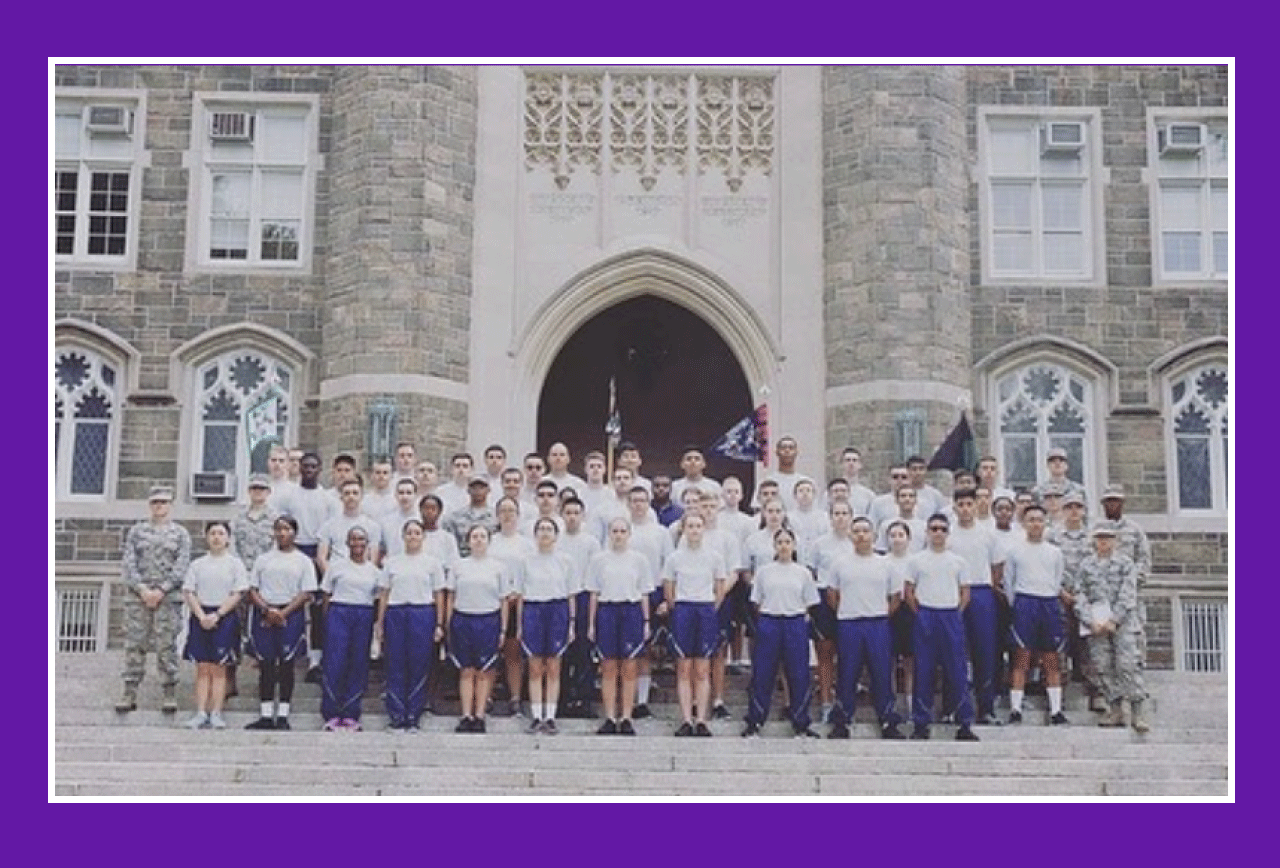
Both Army ROTC and AFROTC at NYU are “crosstown” programs. This means ROTC students from universities across the area gather at one central campus once or twice a week for training and coursework. AFROTC cadets are a part of Manhattan University’s AFROTC Detachment 560. Army ROTC cadets are a part of Fordham University’s program. While cadets train and meet on their home campuses, the bulk of their ROTC experience takes place at their respective crosstown campus, alongside cadets from colleges across New York City.
“When I joined in my first year, I wasn’t a very confident person,” Nicole says. However, her in-depth leadership training has changed that. What’s more, as she looks ahead to her junior year, she’s excited to take on more responsibility. “Air Force ROTC definitely built my confidence. I’ve seen a lot of change within myself as I’ve grown as a leader.”
Ready to Take the Next Step?
No matter your goals, ROTC at NYU can help you achieve them and more. Studying in New York City gives ROTC cadets access to a wealth of opportunities.
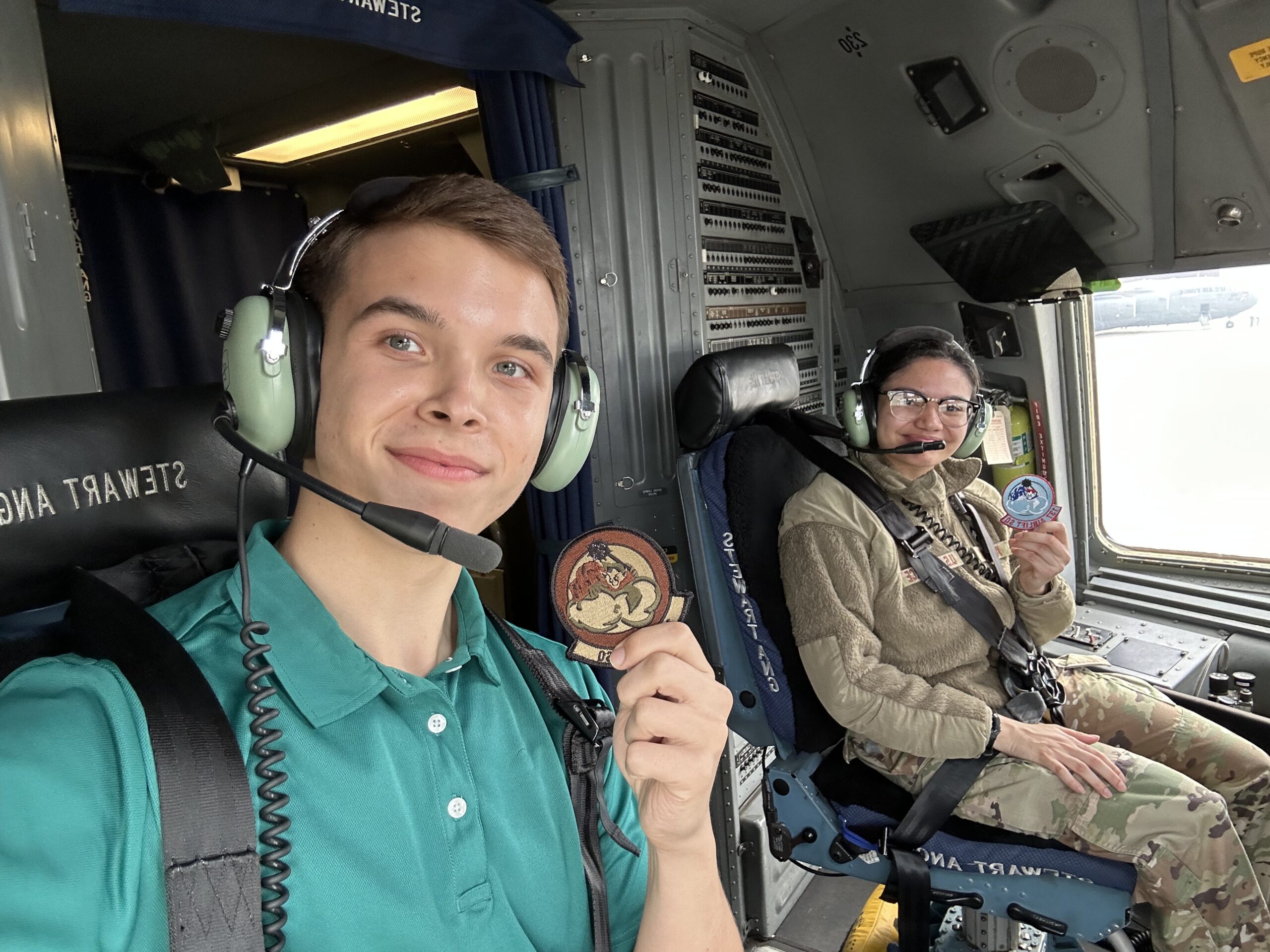
“Being in New York City gives us a unique advantage over almost every other detachment out there,” says AFROTC cadet Andrew Abshire. Andrew is a senior majoring in Mechanical Engineering at NYU Tandon with connections to the University’s and city’s military veteran network. He even flew over Niagara Falls in a C-17 aircraft! “We have four-star generals that stop by to talk with us. We have the FBI and the CIA here. But I think the biggest thing is the number of different viewpoints you get in such a big city. We’re a melting pot of ideas and experiences.”
Whether you’re interested in Army ROTC or Air Force ROTC, the best place to start is by applying for the scholarship. You can apply during the summer between your junior and senior year of high school or, if you’re taking a gap year, the year after you graduate from high school. You can even apply during your first or sophomore year in college.
“ROTC is an incredible level of responsibility and work, but it’s extremely rewarding,” Rahul concludes. He currently serves as commander of his Army ROTC company, where he oversees training for nearly 50 cadets. Following graduation he plans to join the Army National Guard. “Nowhere else on campus can you get this type of impactful leadership experience.”
Related
Community Engagement and Outreach at NYU
NYU students are involved in many community engagement opportunities, volunteering their time to work toward causes they care about.
Alternative Breaks: Building Community through Service
Alternative Breaks are service-oriented, immersive opportunities around the world where civic-minded NYU students learn and build community.