
At NYU, research is not only for faculty members and graduate students. Across schools and campuses, undergraduates are exploring big questions and uncovering new knowledge that has real-world impact. What’s more, they’re making the most of the University’s expansive resources to personalize their academic paths, gain practical experience, and put what they’ve learned in class into practice. Here are just a few ways NYU students are creating a more accessible and sustainable future through research.
Want to dive deeper into research at NYU? Learn how three recent alumni are driving change for human well-being and care through their research projects.
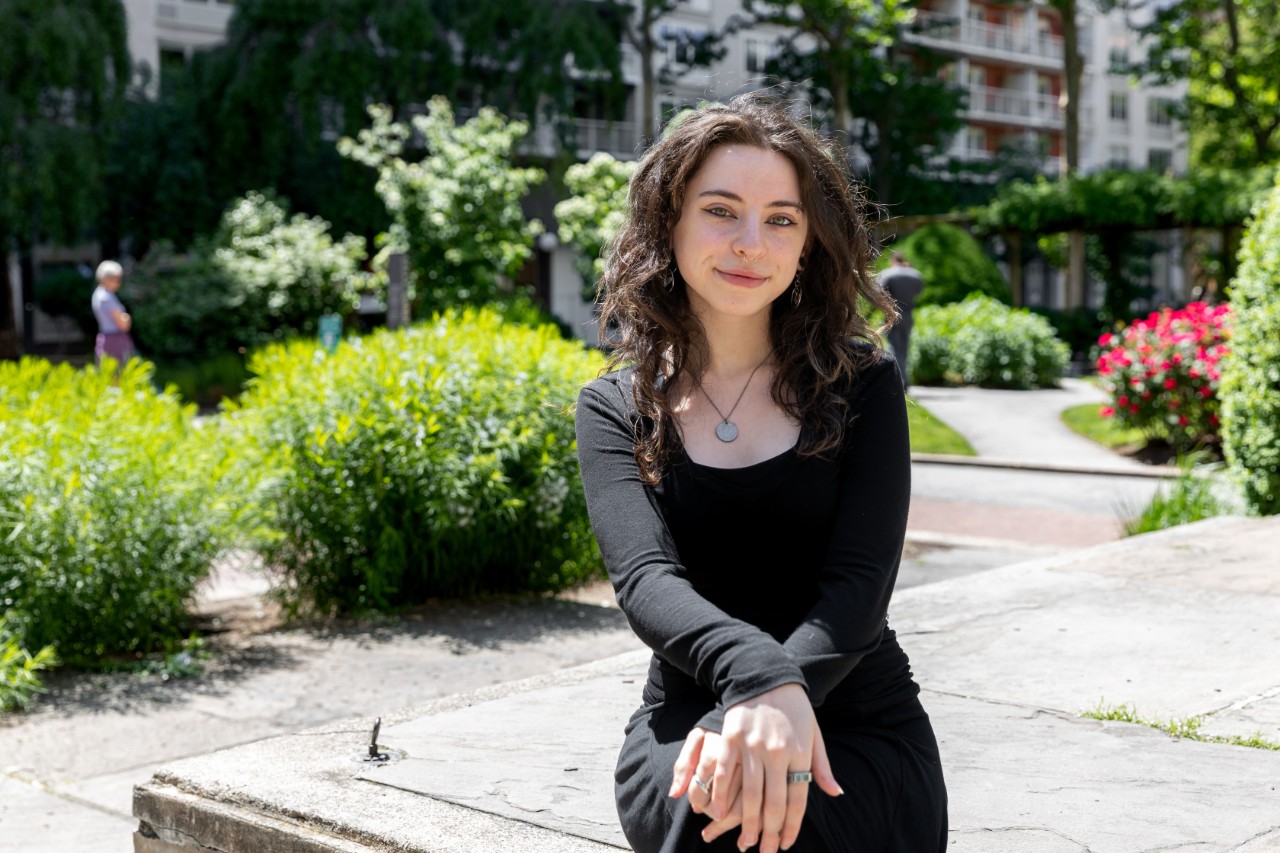
Shira Maps a Buzzing Urban Ecosystem
Shira Linsk, College of Arts and Science Class of 2025, has two unusual pets: a tarantula and a millipede. As a Biology and Environmental Studies major at NYU, she turned her lifelong love for insects into a thesis project. Her research, “Modeling Habitat Suitability for Insect Pollinators in New York City,” examined 20 years of environmental data. She used it to predict how native pollinators, like bees, butterflies, and beetles, respond to changes in their urban habitats.
“Insects are important and diverse animals that are sadly often overlooked in conservation efforts,” Shira says. Surprisingly, her findings offered some cautious optimism. Overall, New York City is becoming less hospitable to pollinators as it becomes hotter and drier. However, areas like Manhattan, with urban greening projects, are becoming more insect friendly. “The urban forest is actually increasing in suitability,” she says. “Which suggests local improvements in habitat quality.” With mentorship from Assistant Professor of Biology Kristin Winchell, Shira honed her data modeling skills and clarified her path forward. Next up? Graduate research in ecology and evolution at the University of Chicago.
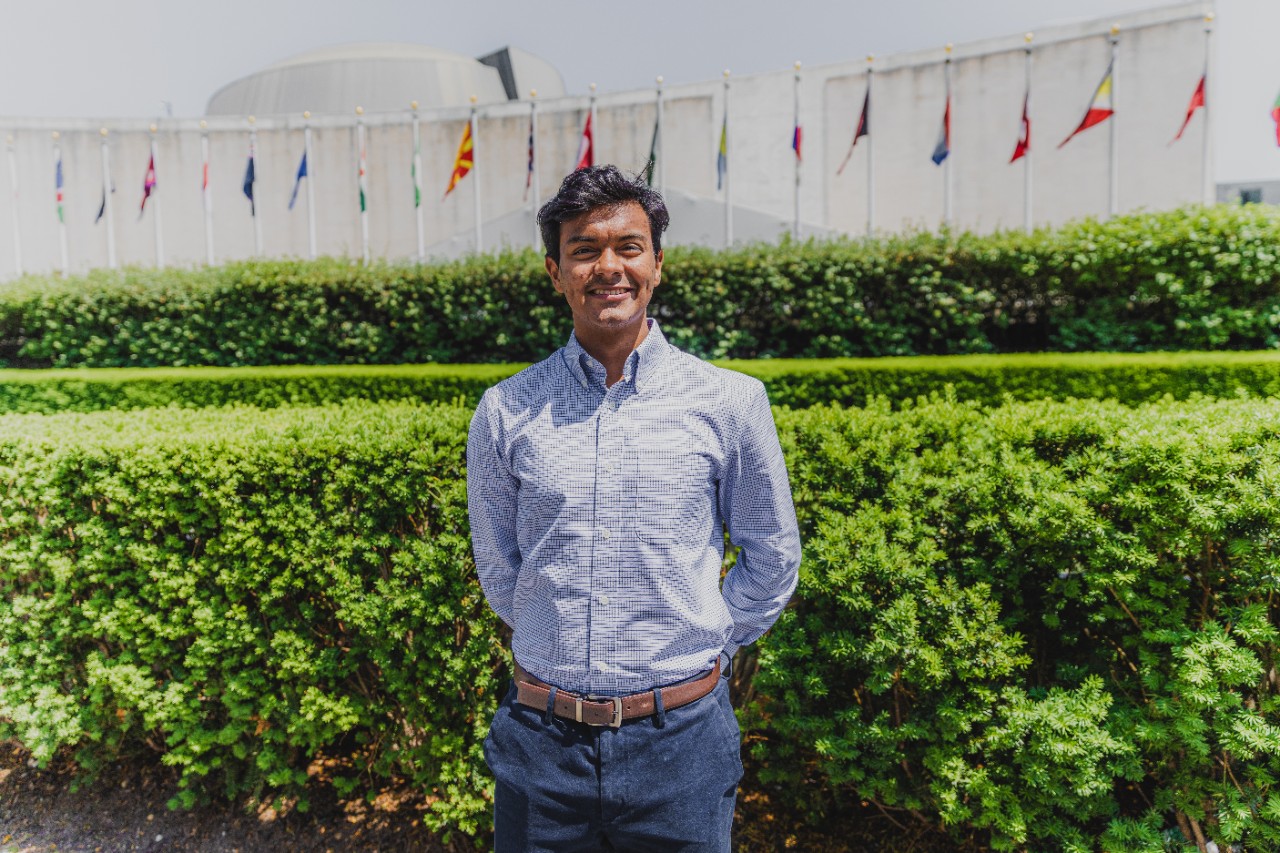
Matías Makes Sense of Labor Shifts
Matías Rodriguez, NYU Abu Dhabi Class of 2025, majored in Economics and used research to better understand economic inequality and the systems that shape. Growing up in Ecuador, “I wanted to understand why there are these huge gaps in equality,” he explains. As a research assistant to Professor Torsten Figueiredo Walter, Matías studied how agricultural seasonality affects labor migration. In countries with high seasonality, people often work on farms part of the year. Then, they take urban manufacturing jobs in the off-season. This can be a positive sign for a country’s economy, he explains, indicating economic growth and more sustainable livelihoods.
Matías cleaned and analyzed large labor datasets from Latin America and Africa, combining them with information from the UN’s Food and Agriculture Organization. He also applied those skills to his senior Capstone thesis on informal labor in Ecuador and during a summer internship with the UN. There, he helped assess how effectively global aid is implemented to support marginalized communities. Thanks to his NYU research, he says, “I now feel confident that I could go and download any country’s dataset and do analysis on my own.”
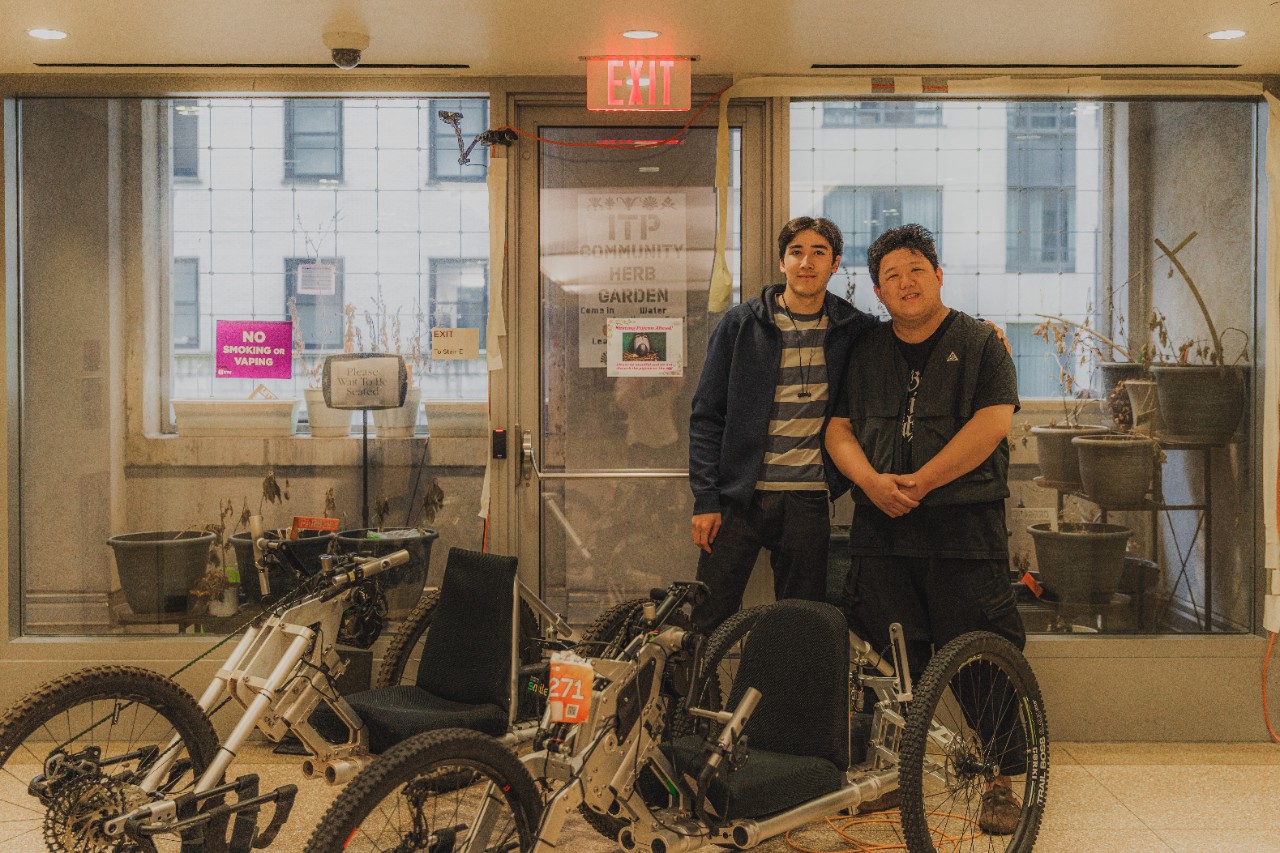
Jackson and Yuxiang Design for Inclusive Adventures
“The one-line description of our project was, we’re creating a modular, adaptive mountain bike frame for wheelchair users,” says Jackson Kollmorgen, Tandon School of Engineering Class of 2025. A major in Mechanical Engineering, he was part of a small research team led by Noel Joyce at NYU Shanghai and Phil Caridi at NYU Tandon. Together with collaborator Yuxiang Cheng, NYU Tisch School of the Arts Class of 2025, the duo created a hand-pedal bike “to fit the needs of different kinds of people with different kinds of physical abilities,” explains Yuxiang, who majored in Interactive Media Arts.
Unlike most adaptive mountain bikes, which are expensive, custom-welded, and not easily adjustable, their design is open-source, affordable, and modular. Jackson focused on the bike’s frame design, while Yuxiang worked on a sensor to monitor rider performance and help tailor the bike to different users’ needs. For both students, the project was a way to apply their skills while creating inclusive solutions. “It’s something I can get really passionate about, because it feels like I’m making a difference,” says Jackson.
Related
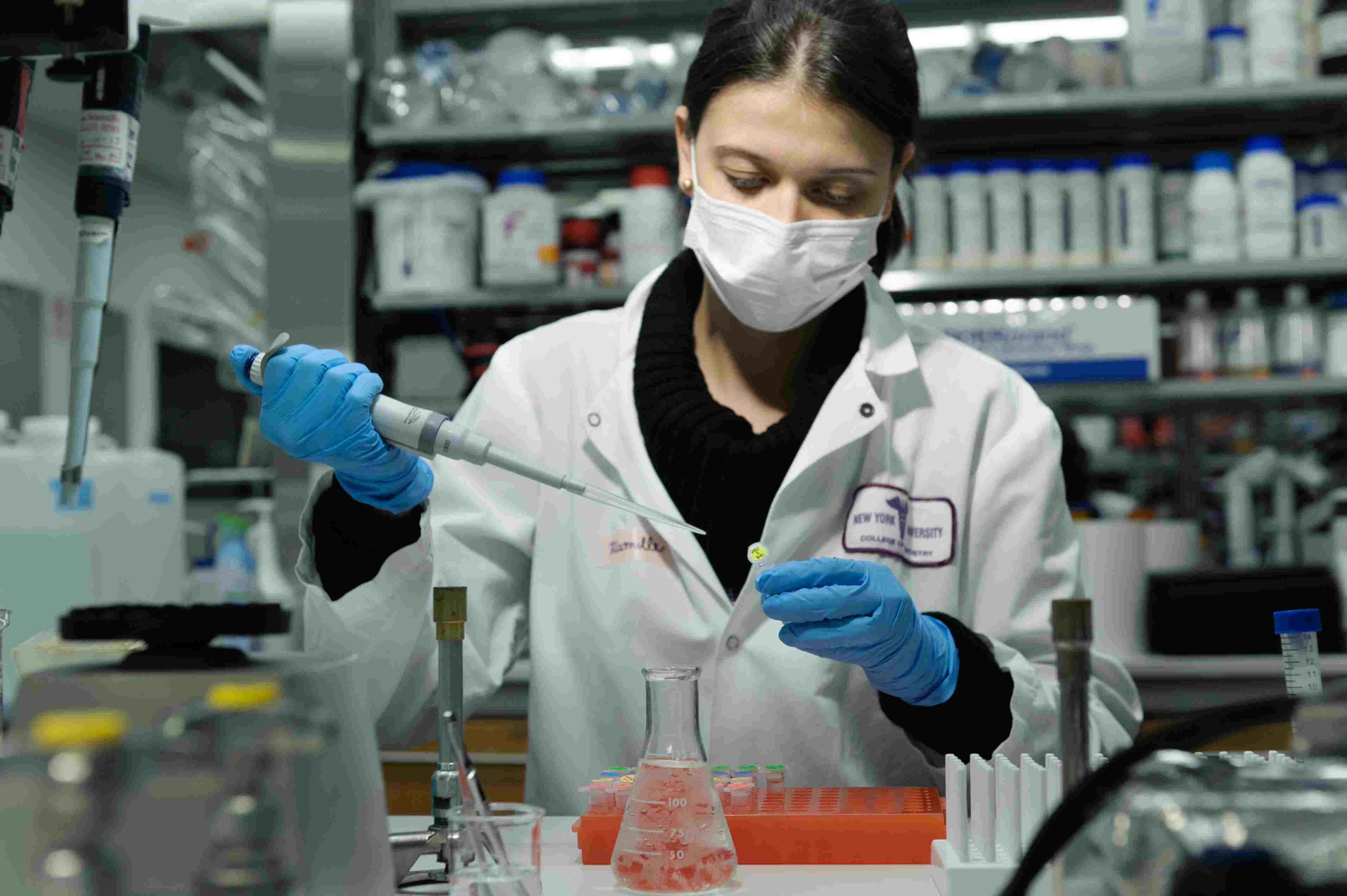
I Want to Do Research at NYU! But Where Do I Even Begin?
There are plenty of research opportunities at NYU. Curious how to get involved? Read on!
8 Ways to Study Sustainability at NYU
Take these courses to gain a deeper understanding of some of the most important economic, environmental, and social issues of our time.
Faculty Research Lets CAS Senior Trisha Gupta Do It All
Through research experience with NYU faculty members, Trisha’s charted an academic course that bridges prehealth, English, chemistry, and medieval studies.